



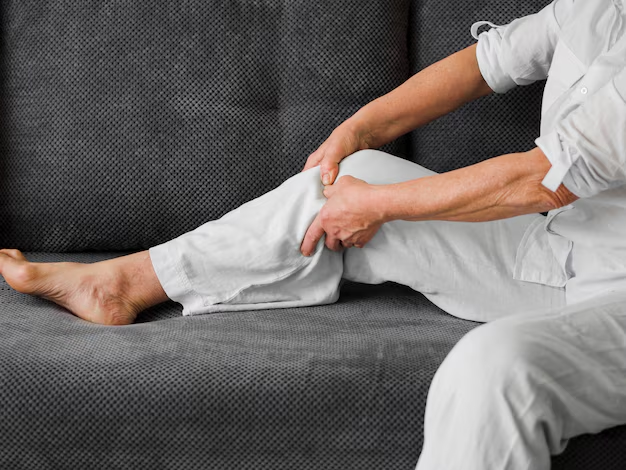
Don’t Ignore Joint Pain and Morning Stiffness — It Could Be Arthritis; Doctor Suggests Important Preventative Measures
Joint pain, swelling, and morning stiffness are some of the most common early signs of arthritis, yet most people ignore them thinking it’s just tiredness or age. Doctors say that when stiffness lasts more than 20–30 minutes after waking up, or when joints feel heavy and painful regularly, it could be a sign that your joints are developing inflammation. If this inflammation is not controlled in the beginning, it slowly damages the cartilage—the soft layer that protects the bones—leading to long-term pain and reduced movement.
1. Why Does Morning Stiffness Happen?
When you sleep, your body stays still for several hours. If your joints already have mild inflammation, they become even stiffer after inactivity. This is why, when you wake up, your fingers, knees, or back feel tight, heavy, and difficult to move. Doctors say this is often the first visible sign of arthritis, especially if the stiffness continues daily.
2. Why Do Joints Start Hurting in Arthritis?
Arthritis damages the cartilage—this is the cushion that prevents bones from rubbing. Once this cushion becomes thin, the bones start touching each other, creating pain, swelling, and discomfort. Over time, the joint loses flexibility, and even simple movements like walking, bending, or climbing stairs become painful. Early detection is important because the damage becomes harder to reverse later.
3. Common Symptoms You Should Never Ignore
- Pain or swelling in knees, fingers, ankles, or wrist
- Stiffness after waking up that lasts more than 20–30 minutes
- Cracking or grinding sounds while moving joints
- Difficulty walking or climbing stairs
- Reduced flexibility in hands or legs
These signs may look small but point towards increasing joint inflammation.
4. Major Causes of Arthritis (According to Doctors)
- Increasing age: Cartilage becomes weaker.
- Being overweight: Extra body weight puts pressure on knees and hips.
- Lack of movement: Long sitting hours stiffen the joints.
- Nutritional deficiencies: Low Vitamin D, calcium, and omega-3 cause weak bones.
- Injury: Old injuries can lead to early arthritis.
- Genetic factors: If family members have arthritis, the risk increases.
5. Doctor’s Preventative Measures to Protect Your Joints
• Stay physically active: Light exercises like walking, stretching, and yoga keep joints flexible and protect cartilage.
• Maintain a healthy weight: Even losing 3–5 kg can reduce knee pressure significantly.
• Eat anti-inflammatory foods: Tomatoes, berries, walnuts, flax seeds, turmeric, and green leafy vegetables reduce joint swelling naturally.
• Avoid long sitting: Stand, walk, or stretch every 45–60 minutes.
• Strengthen muscles: Strong muscles support the joints and prevent damage.
• Check Vitamin D and calcium levels: Deficiency weakens bones and increases arthritis risk.
• Use hot & cold therapy: Warm compress relaxes stiff muscles; cold compress reduces swelling.
6. When You Should See a Doctor Immediately
If joint pain or stiffness lasts more than 2–3 weeks, or the swelling keeps increasing, you must consult a doctor. Early treatment can slow arthritis, prevent cartilage loss, and stop future disability.

