



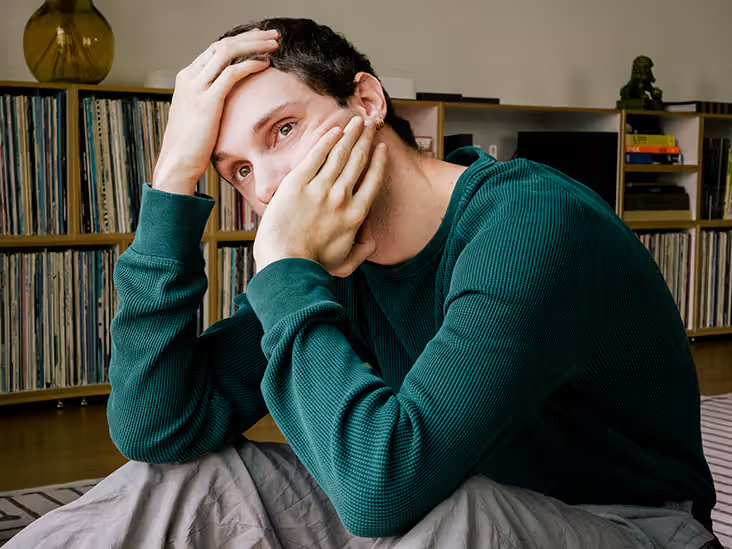
Feeling stressed for no reason? You might be experiencing “secondhand stress.”
It happens when you absorb anxiety, pressure, or negativity from people around you — even if nothing stressful is happening in your own life.
Here’s a clear explanation and how to prevent it:
What is “Secondhand Stress”?
Secondhand stress is when someone else’s tension becomes your tension.
Just like secondhand smoke, you don’t create it — but you still feel its effects.
Examples:
- Your coworker is panicking → you start feeling anxious
- Family member constantly worried → your mood drops
- Watching stressful news all day → you feel overwhelmed
- Friend complaining nonstop → you feel mentally drained
Your brain mirrors emotions. This is called emotional contagion.
Signs You’re Experiencing Secondhand Stress
- Feeling anxious without knowing why
- Sudden irritability after talking to someone
- Mental exhaustion despite doing nothing stressful
- Overthinking other people’s problems
- Trouble sleeping after negative conversations
- Feeling responsible for everyone’s emotions
Why It Happens
- High empathy – You easily absorb others’ feelings
- Constant exposure to negativity – work, family, social media
- Lack of emotional boundaries
- People-pleasing habit
- Brain’s mirror response – you subconsciously copy emotions
How to Prevent Secondhand Stress
1. Create emotional boundaries
Listen, but don’t carry others’ problems as your own.
2. Limit exposure to negative people
You don’t have to cut them off — just reduce time.
3. Take “mental breaks” after heavy conversations
Walk, stretch, or sit quietly for 5 minutes.
4. Don’t consume too much stressful news
Constant bad news increases hidden anxiety.
5. Ask yourself: “Is this my stress?”
This simple question separates your emotions from others’.
6. Practice emotional reset
Deep breathing
Music
Short walk
Drinking water
These help your brain calm down.
7. Protect your energy
Not every problem needs your emotional involvement.
Think About It
If you:
- feel stressed after scrolling social media
- feel drained after certain conversations
- worry about things that don’t affect you
Then your stress may not be yours — it’s borrowed.
Bottom line:
Secondhand stress is real. Protecting your mental space is just as important as managing your own stress.

