



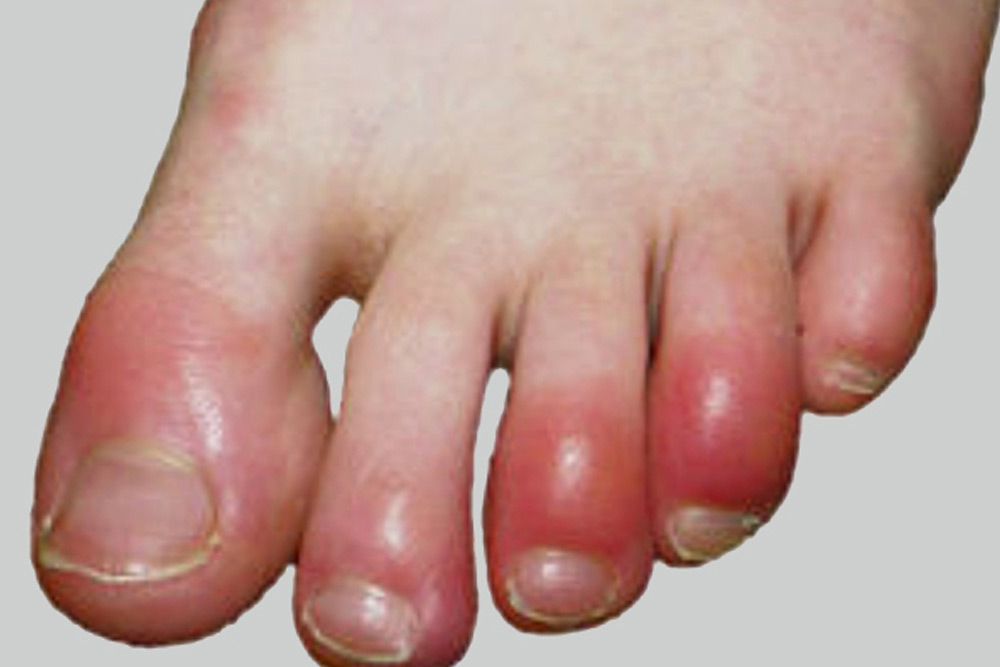
1. Frostbite (Cold Injury)
In extreme cold, blood circulation to the toes drops sharply.
- Skin may turn pale → blue → black
- Tingling, numbness, and pain
- If untreated, tissue damage can occur
This is a medical emergency when skin turns black.
2. Chilblains (Skin Inflammation)
Sudden exposure to cold can irritate small blood vessels.
- Red/blue patches
- Burning, itching, tingling
- Swelling of toes
Happens most in people with poor circulation.
3. Raynaud’s Phenomenon
Cold triggers spasms in blood vessels.
- Toes turn white → blue → red
- Tingling and numbness
- Toes feel extremely cold
It’s common and often ignored but needs evaluation if frequent.
4. Peripheral Artery Disease (Blocked Arteries)
In some people, especially smokers or diabetics, arteries narrow.
- Blackening of toes
- Cold feet
- Pain while walking
This can be serious and needs immediate medical attention.
5. Diabetic Nerve Damage
Low circulation + nerve issues can make toes:
- Tingle
- Lose sensation
- Darken in severe cases
Winter worsens symptoms due to reduced blood flow.
6. Vitamin B12 Deficiency
It can cause nerve damage, especially in cold months.
- Tingling
- Numb toes
- Weakness
Levels should be checked if symptoms are frequent.
7. Poor Footwear in Winter
Tight shoes or thin socks block blood flow.
- Tingling
- Discoloration
- Coldness
Always wear warm, cushioned socks and proper winter footwear.
When to worry? (IMPORTANT)
- Skin turning black or grey
- Severe pain or complete numbness
- Sores that don’t heal
- Toes staying discolored for hours
These signs mean the circulation is seriously affected.
What to do immediately
- Warm your feet slowly (not with hot water)
- Wear wool socks
- Keep blood sugar in control if diabetic
- Avoid smoking
- Move your toes frequently to improve blood flow
Disclaimer: This article is for informational and educational purposes only and should not be considered medical advice. Always consult a qualified healthcare professional before making any health, diet, or treatment decisions. SehatTak is not responsible for any actions taken based on this information.

