



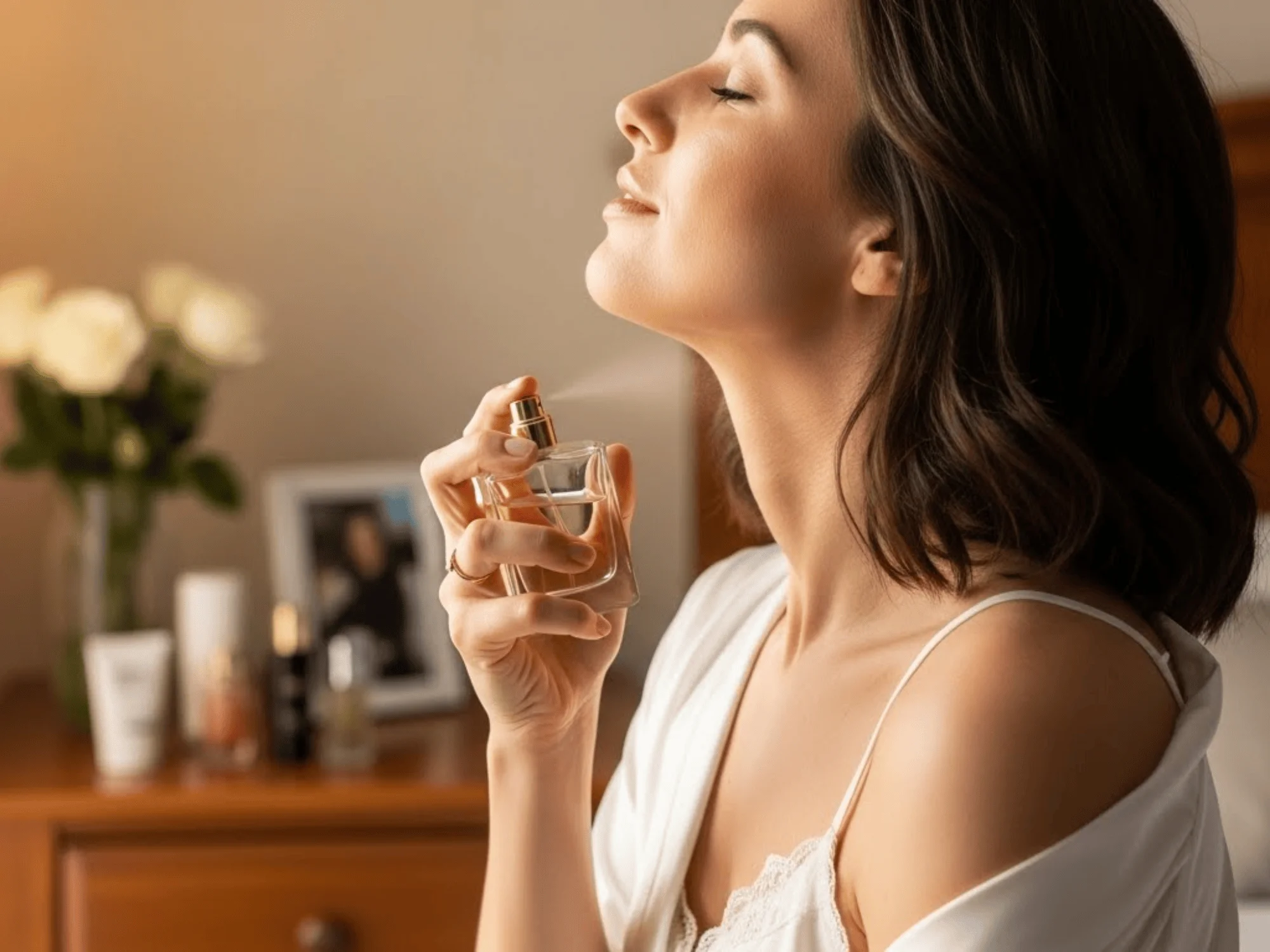
Applying perfume to the neck is one of the most common ways to wear fragrance. But is it actually the best place to spray it? Fragrance experts often recommend the neck because it is a warm area of the body, while dermatologists point out that perfume can sometimes irritate sensitive skin.
So, should you apply perfume to your neck? Yes, if your skin tolerates fragrance well—but there are a few things you should know before making it part of your daily routine.
Why Do People Apply Perfume to the Neck?
The neck is considered a pulse-point area, meaning it is naturally warmer than some other parts of the body. Fragrance experts commonly recommend pulse points because warmth can help a fragrance develop and release its scent.
The sides of the neck, behind the ears and wrists are therefore popular places to apply perfume.
For many people, spraying perfume lightly on the neck also helps create a noticeable scent around the face and upper body without requiring a large amount of fragrance.
Is Perfume on the Neck Safe?
For most people, occasional perfume application to intact skin is not automatically a problem. However, fragrance can cause irritation or an allergic reaction in some people.
The American Academy of Dermatology notes that fragrance is a common cause of contact dermatitis. The neck is also among the areas where fragrance-related contact dermatitis can occur. Symptoms may include redness, itching, burning, swelling or a rash.
That means the question isn’t simply whether perfume can be applied to the neck. It is also whether your particular skin tolerates the ingredients in that fragrance.
When Should You Avoid Spraying Perfume on Your Neck?
You may want to avoid applying perfume directly to your neck if:
- Your skin is already irritated, dry or damaged.
- You have previously reacted to fragrances.
- A particular perfume causes itching, redness or burning.
- You have a rash or unexplained skin reaction in the area.
- You are going to expose the freshly perfumed area to strong sunlight and have noticed that the product causes a reaction.
The AAD explains that some substances can cause a skin reaction when they are followed by exposure to ultraviolet light, a phenomenon known as photocontact dermatitis.
If a fragrance consistently causes a reaction, don’t simply keep using it and hope your skin adjusts. Dermatologists can help determine whether fragrance or another ingredient is responsible.
What’s the Best Way to Apply Perfume to Your Neck?
If your skin handles fragrance well, experts generally recommend a light application rather than soaking the skin.
Try these tips:
1. Spray lightly
One or two sprays may be enough, depending on the strength of the perfume. You don’t need to repeatedly spray the same area to make your fragrance noticeable.
2. Don’t rub the perfume into your skin
Spray or dab the fragrance and allow it to dry naturally. Rubbing can alter how the fragrance develops and may make the scent disappear more quickly.
3. Consider moisturizing first
Fragrance tends to last better on moisturized skin than very dry skin. If you use moisturizer before perfume, choose an unscented or fragrance-free product so the scents don’t compete with each other.
4. Don’t spray on broken or irritated skin
Perfume contains fragrance ingredients and often alcohol, which can sting irritated or damaged skin. Wait until the skin has recovered.
What If Your Neck Is Sensitive?
If your neck becomes itchy, red or irritated after applying perfume, stop using the fragrance on that area.
The AAD recommends testing new skin-care products on a small area before regular use because even products that seem suitable can cause a reaction. If you develop a reaction, discontinue the product.
You can also choose to wear fragrance on clothing instead of directly on your skin, provided the product’s instructions and the fabric allow it. Be aware that perfume can stain or discolor some materials.
Can You Apply Perfume Behind Your Ears Instead?
Yes. Behind the ears is another traditional fragrance application point. However, the same skin-sensitivity considerations apply. If perfume irritates the skin behind your ears, choose another application method.
It’s also worth remembering that applying fragrance to multiple pulse points doesn’t necessarily mean your perfume will last dramatically longer. The concentration and formulation of the fragrance, the amount applied, your skin and the environment all influence how long the scent remains noticeable.
Should You Spray Perfume Directly on Your Skin or Clothes?
There isn’t one universal answer.
Skin:
Perfume can interact with your skin’s natural oils and develop differently from person to person. This is one reason the same fragrance may smell slightly different on different people.
Clothing:
Applying fragrance to clothing can be an alternative if your skin is sensitive, but some perfumes may stain delicate or light-colored fabrics.
If you’re unsure, check the fragrance manufacturer’s instructions and test a small, inconspicuous area of fabric first.
What Do Dermatologists Recommend for Sensitive Skin?
If you know that fragrance irritates your skin, dermatologists generally recommend choosing fragrance-free products rather than simply products labeled “unscented.” The AAD explains that “unscented” products can still contain fragrance ingredients used to mask odors.
If you repeatedly develop a rash after wearing perfume, a dermatologist can help identify the cause. Patch testing may sometimes be used to determine which ingredient is triggering the reaction.
The Bottom Line
Yes, you can apply perfume to your neck if your skin tolerates it. The neck is a traditional pulse-point location and can be an effective place to wear fragrance.
However, perfume isn’t automatically suitable for every person’s skin. If you experience redness, itching, burning or a rash, stop applying the fragrance to that area. People with sensitive skin may prefer applying fragrance to clothing or using fragrance-free products instead.
The best approach is simple: use a small amount, avoid irritated skin, don’t rub it in, and pay attention to how your skin responds.
Your perfect perfume routine isn’t necessarily about applying fragrance in every recommended spot—it’s about finding a method that smells good while keeping your skin comfortable.

