



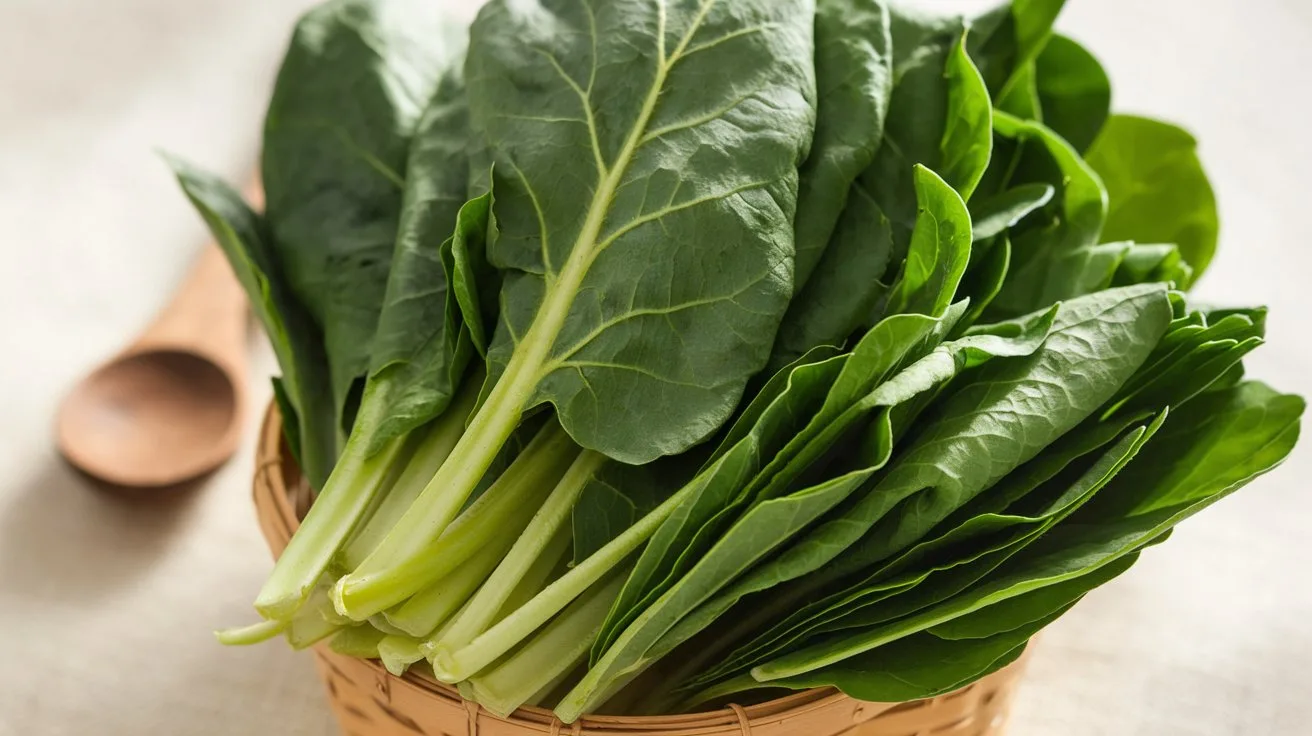
Every year, when the month of Sawan (Shravan) arrives, many Indian households make changes to their daily diet. Along with fasting on certain days and choosing simpler foods, some families traditionally avoid green leafy vegetables such as spinach (palak), fenugreek (methi), mustard greens (sarson), amaranth (chaulai) and other leafy saag.
At first, this may seem like a purely religious restriction. But the advice given by elders has another interesting side: Sawan generally coincides with the monsoon season in India, when humidity, moisture, muddy conditions and water contamination can create additional food-safety challenges.
This does not mean that leafy vegetables are unhealthy. In fact, leafy greens are highly nutritious. The traditional advice is better understood as a seasonal precaution, combined with religious and Ayurvedic practices.
Why Are Green Leafy Vegetables Traditionally Avoided in Sawan?
There is no single explanation for this custom. It developed through a combination of religious beliefs, seasonal observations, traditional food practices and concerns about hygiene.
The most practical explanation is that leafy vegetables can be particularly difficult to clean during the rainy season.
1. Monsoon Creates Damp Conditions
During the rainy season, fields and vegetable-growing areas remain wet and humid. Soil, mud and water can easily come into contact with vegetables.
Leafy vegetables have many folds, crevices and closely packed leaves. Mud and other contaminants can therefore remain trapped between the leaves, making them more difficult to clean thoroughly than many smooth-surfaced vegetables.
Modern food-safety guidance also emphasizes buying fresh, undamaged leafy vegetables and washing produce thoroughly with safe water before preparation.
2. Insects and Tiny Organisms Can Be More Common
Rain and humidity create favorable conditions for many insects and other organisms. Small insects, larvae and eggs can hide among leafy vegetables and may not always be immediately visible.
This is one reason older generations may have considered the monsoon a less suitable period for consuming saag. Historical food practices developed at a time when people did not have today’s washing facilities, refrigeration, supply chains and food-quality controls.
The important point is that the traditional warning was not necessarily saying that every leaf was dangerous. Rather, the risk of contamination was considered greater and the process of cleaning the vegetables was more difficult.
3. Higher Moisture Can Increase Food-Safety Concerns
Moisture and humidity can encourage the growth of microorganisms when food is improperly handled or stored.
Rainwater can also contribute to contamination when sanitation and drainage are poor. For this reason, monsoon food safety places particular importance on clean water, fresh ingredients, proper washing and adequate cooking.
This gives a practical interpretation to the advice of elders: during a season when contamination may be harder to control, choosing foods that are easier to clean and cook can be a sensible precaution.
4. Leafy Greens Are Harder to Clean Than They Look
A bunch of spinach may appear perfectly clean from the outside while dirt or insects remain between individual leaves.
This is particularly relevant when vegetables are purchased from markets where they may have been exposed to soil, water, handling and transportation.
Food-safety guidance recommends removing spoiled or damaged portions and washing vegetables thoroughly with potable water.
Therefore, if someone chooses to eat leafy vegetables during the monsoon, proper washing and cooking are more important than simply assuming that the vegetables are safe because they look fresh.
5. What About the Ayurvedic Explanation?
Ayurveda has its own seasonal framework for the rainy season, known as Varsha Ritu. Traditional Ayurvedic thinking considers digestion to be more vulnerable during this period and generally emphasizes fresh, warm and relatively light meals.
This is why traditional Sawan diets often focus on simple preparations and may reduce foods considered difficult to digest.
However, it is important not to present Ayurvedic concepts and modern medical science as if they are identical. Concepts such as agni belong to the traditional Ayurvedic framework, while modern medicine explains foodborne illness primarily through factors such as microorganisms, contamination, sanitation, food handling and individual health conditions.
6. Sawan Is Also a Month of Dietary Discipline
There is another important side to the tradition.
Sawan is a spiritually significant month for many Hindus, particularly devotees of Lord Shiva. Dietary restrictions are often part of a broader practice of self-discipline, simplicity, fasting and devotion.
Different families and regions follow different rules. Some avoid leafy greens throughout Sawan, while others follow the restriction mainly on fasting days or particular days of worship.
Therefore, avoiding saag should not be described as a universal religious rule followed by every Hindu household.
Is It Scientifically Necessary to Stop Eating Green Vegetables During Sawan?
Not necessarily.
There is no general medical rule that says everyone must stop eating leafy vegetables simply because Sawan or the monsoon has arrived.
Leafy vegetables remain excellent sources of nutrients, including folate, vitamin K, carotenoids, fiber and various minerals. The concern during the rainy season is primarily about contamination, handling and preparation, rather than the nutritional value of the vegetables themselves.
In fact, recent discussions on monsoon nutrition emphasize that people do not necessarily need to eliminate leafy vegetables completely. Instead, they should pay greater attention to freshness, washing, storage and cooking.
If You Eat Leafy Vegetables During Monsoon, What Should You Do?
If your family tradition allows leafy vegetables during Sawan, basic food-safety precautions can make a significant difference.
Choose carefully
Buy fresh, crisp leaves and avoid vegetables that are yellowing, damaged, spoiled, insect-infested or have an unpleasant smell. FSSAI specifically recommends avoiding damaged or insect-infested leafy vegetables.
Wash thoroughly
Separate the leaves and wash them carefully under safe, potable water. Remove visible dirt, insects and damaged portions.
Cook properly
During the monsoon, properly cooked food is generally a safer choice than raw or inadequately washed produce.
Avoid questionable produce
If the vegetables appear excessively muddy, damaged, stale or poorly stored, it is better to choose another batch.
Maintain kitchen hygiene
Clean knives, chopping boards, hands and cooking surfaces properly, and prevent raw produce from contaminating ready-to-eat foods.
So, Was the Advice of Our Elders Wrong?
Not necessarily—but it should be understood in the right context.
Our elders did not have access to modern microbiology, laboratory testing, refrigerators, packaged food systems or today’s food-safety infrastructure. Yet generations of observation could identify seasonal patterns that influenced food customs.
The traditional avoidance of leafy vegetables during Sawan may therefore be viewed as a combination of religious practice and practical seasonal caution.
At the same time, it would be an overstatement to say that modern science proves that all green leafy vegetables become harmful during Sawan. They do not. The actual concern is that monsoon conditions can make contamination and proper cleaning more challenging.
The Bigger Lesson Behind the Tradition
Perhaps the most valuable part of this old advice is not the instruction to permanently label one food as “bad” for an entire month.
It is the broader principle:
Eat according to the season, pay attention to food hygiene, prefer fresh food, and avoid unnecessary contamination risks.
For families that observe the Sawan tradition, avoiding leafy greens can also be part of religious discipline. For those who do not follow the restriction, careful selection, washing and cooking can help make leafy vegetables part of a healthy monsoon diet.
Final Thoughts
The tradition of avoiding green leafy vegetables during Sawan has survived for generations because it sits at the intersection of faith, seasonal living, traditional dietary practices and practical food safety.
The monsoon can bring increased moisture, insects, mud and contamination risks, and leafy vegetables can be particularly difficult to clean. These factors provide a reasonable practical explanation for why elders historically advised people to temporarily avoid saag.
But green vegetables themselves are not inherently unhealthy during Sawan. With modern food-safety practices, fresh produce can generally be consumed safely. Ultimately, whether a family avoids leafy vegetables for religious reasons, seasonal caution, or continues eating them with proper hygiene is a matter of individual and family practice.
The wisdom in the old advice may therefore be less about fearing green vegetables and more about respecting the season, maintaining cleanliness and being thoughtful about what reaches our plate.

