



Aging is a natural process, but losing muscle strength and mobility does not have to be an unavoidable part of getting older. After the age of 60, many people begin to notice that walking for long periods, climbing stairs, standing up from a chair, or maintaining balance becomes more challenging. One reason for this can be the gradual loss of muscle mass and strength that occurs with age. The thigh muscles are particularly important because they help support the knees, stabilize the body, and make everyday movements easier.
The good news is that regular physical activity can help older adults maintain muscle strength, improve mobility, and remain independent for longer. Even simple exercises performed while sitting on a chair can be a useful starting point for people who find standing workouts difficult. These exercises can be done at home, require little or no equipment, and can be adjusted according to individual fitness levels.
Here are seven simple exercises that may help older adults maintain stronger legs and healthier movement after the age of 60.
1. Seated Knee Extensions
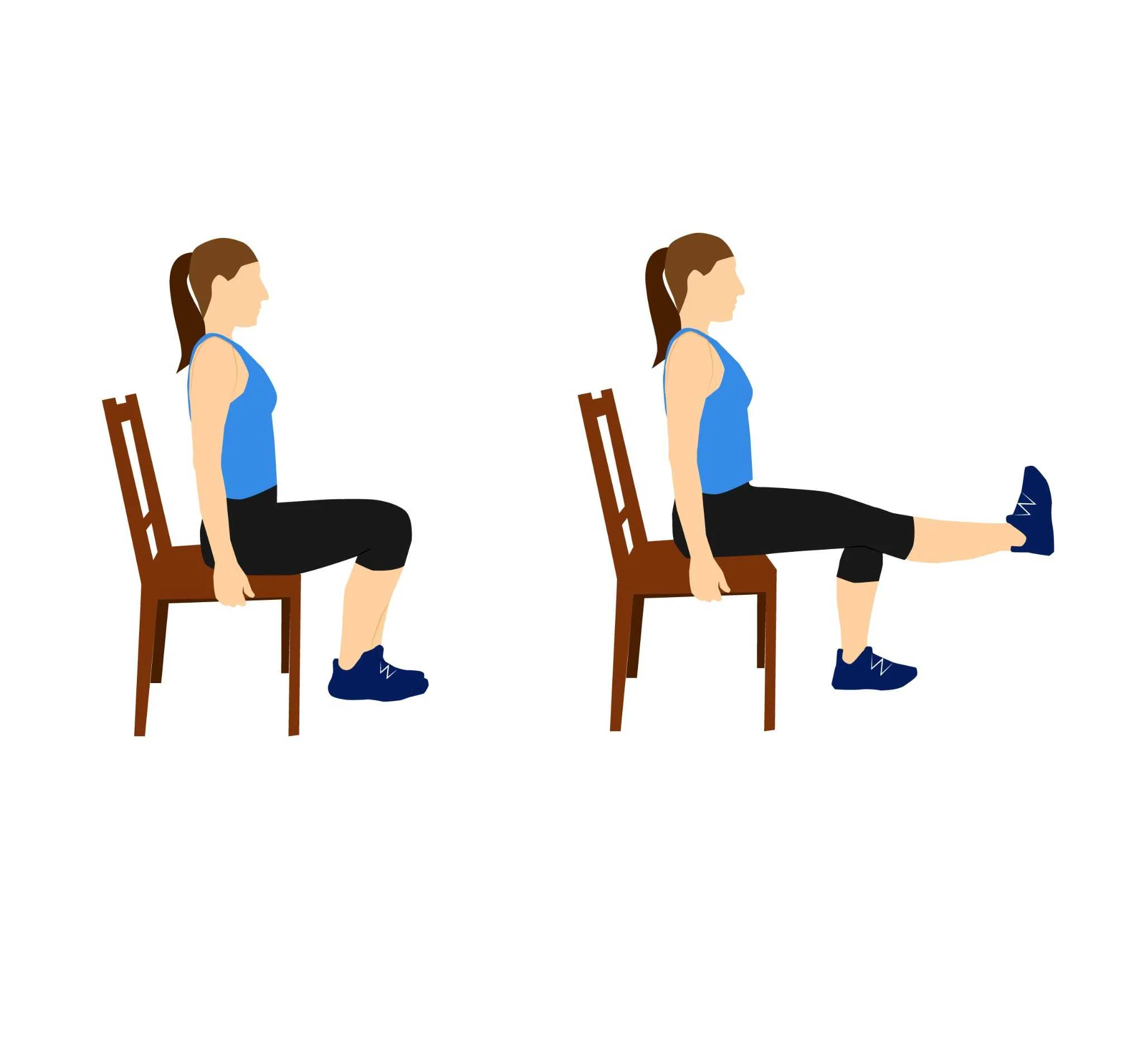
Seated knee extensions are one of the simplest exercises for strengthening the quadriceps, the muscles located at the front of the thighs. These muscles play an important role in straightening the knees, walking, climbing stairs, and getting up from a seated position.
To perform this exercise, sit upright on a sturdy chair with both feet resting flat on the floor. Slowly straighten one leg in front of you until the knee is extended comfortably. Hold the position for two to five seconds, then lower the foot back to the floor in a controlled manner. Repeat the movement with the other leg.
Start with five to ten repetitions on each leg and increase gradually as your strength improves. Avoid swinging your legs or locking your knees forcefully. Practising this movement regularly can help maintain quadriceps strength and support everyday activities that require knee extension.
2. Seated Marching
Seated marching is a gentle exercise that activates the muscles of the thighs and hips while allowing you to remain seated. It can be particularly helpful for older adults who want to introduce more movement into their daily routine without immediately attempting demanding exercises.
Sit upright near the front of a stable chair, keeping your back comfortable and your feet flat on the floor. Lift your right knee a few inches, lower it gently, and then lift your left knee. Continue alternating between the two legs as though you are marching in place.
Begin slowly and maintain a comfortable rhythm. You can perform the exercise for 30 seconds and gradually increase the duration according to your ability. Seated marching helps activate the hip flexors and other leg muscles while encouraging regular movement. It may also be useful as a gentle warm-up before other chair exercises.
3. Knee Pillow Squeeze
The knee pillow squeeze focuses on the inner thigh muscles, which contribute to controlling leg movement and stabilizing the hips. These muscles work alongside other lower-body muscles during walking, standing, and changing positions.
To perform the exercise, sit upright on a sturdy chair with your feet flat on the floor. Place a small, soft pillow between your knees. Gently press your knees inward against the pillow, using enough pressure to feel the muscles working without causing discomfort. Hold the squeeze for three to five seconds, then relax.
Repeat the movement five to ten times, breathing normally throughout the exercise. Avoid squeezing as hard as possible, particularly if you have hip, knee, or groin pain.
Although this exercise does not replace a complete leg-strengthening routine, it can help activate the inner thigh muscles and introduce controlled resistance into a simple home workout.
4. Seated Heel Raises
Seated heel raises primarily strengthen the calf muscles rather than the thighs, but they are a useful addition to a balanced lower-body exercise routine. The calf muscles help with walking, pushing off the ground, and maintaining movement around the ankles.
Sit comfortably with your feet flat on the floor and your knees bent at approximately a right angle. Keep your toes and the balls of your feet on the ground while slowly raising both heels. Pause briefly at the top, then lower your heels back to the floor.
Repeat the movement ten times, or fewer if you are just starting. Keep your movements smooth and controlled rather than bouncing your heels up and down.
Stronger calf muscles can support lower-leg function, while regular ankle movement helps maintain mobility. For a more complete routine, combine heel raises with exercises that directly target the quadriceps and hip muscles.
5. Seated Leg Lifts
Seated leg lifts can help strengthen the muscles around the thighs and hips, depending on how the movement is performed. They are a convenient option for older adults who want to practise controlled leg movements at home.
Sit upright on a sturdy chair with your feet resting on the floor. Slowly straighten one leg and lift it slightly, keeping the movement within a comfortable range. Hold the position briefly, then lower the leg slowly. Repeat with the other leg.
Aim for five to ten repetitions on each side initially. Keep your upper body steady and avoid leaning backward to lift your leg higher. The aim is to control the movement rather than achieve maximum height.
This exercise can help maintain lower-body muscle activity and improve control during leg movements. If straightening the knee causes discomfort, reduce the range of motion or ask a physiotherapist for an appropriate modification.
6. Seated Heel Slides
Seated heel slides are a gentle movement exercise that encourages comfortable bending and straightening of the knee. Maintaining knee mobility can make it easier to perform routine activities such as walking, sitting down, and standing up.
Begin by sitting on a stable chair with both feet flat on the floor. Slowly slide one foot backward underneath the chair, allowing your knee to bend comfortably. Then slide the foot forward until your leg returns to its starting position. Repeat the movement with the opposite leg.
Perform five to ten repetitions per leg, moving slowly and avoiding any position that causes pain. Do not force your knee to bend farther than it comfortably allows.
Heel slides are mainly useful for gentle joint movement rather than substantial muscle strengthening. However, they can complement strengthening exercises by encouraging regular movement and helping older adults maintain comfortable knee mobility.
7. Sit-to-Stand Exercise
The sit-to-stand exercise is especially useful because it closely resembles an everyday activity. It works the quadriceps, gluteal muscles, and other muscles involved in standing up and sitting down. These muscles are essential for maintaining independence as we age.
Start with a sturdy chair placed on a non-slip surface. Sit with your feet flat on the floor and positioned approximately shoulder-width apart. Lean forward slightly from your hips, push through your feet, and stand up slowly. Once you are standing steadily, bend your hips and knees and lower yourself back into the chair with control.
If necessary, use the armrests or another stable support to help you stand. Begin with three to five repetitions and gradually increase them as your strength and confidence improve.
Unlike exercises performed entirely while sitting, sit-to-stand involves supporting your body weight. It can therefore be more demanding and should only be attempted if you can do so safely. If you have significant balance problems, severe joint pain, or a recent operation, seek professional guidance before trying it.
How Often Should Adults Over 60 Do These Exercises?
Consistency is more important than doing too much at once. Beginners can start with five to ten repetitions of suitable exercises and perform them at a comfortable pace. A short session several days a week may be a manageable starting point, with gradual increases as strength and tolerance improve.
For the best results, chair exercises should form part of a broader healthy-aging routine. The World Health Organization recommends that older adults work toward regular aerobic activity, muscle-strengthening activities on at least two days per week, and balance-focused activity as part of their weekly routine, according to their abilities and health conditions.
A balanced diet with sufficient protein, adequate hydration, and good sleep also supports healthy muscles. People with chronic medical conditions, significant mobility limitations, or a history of falls should discuss an appropriate exercise plan with a healthcare professional.
Important safety precautions: Choose a sturdy chair without wheels and place it on a non-slip surface. Keep movements slow and controlled, and never hold your breath while exercising. Stop if you experience sharp pain, dizziness, chest discomfort, or unusual shortness of breath. Exercises should not cause worsening knee or hip pain.
Final Takeaway
Keeping the thigh muscles strong after 60 is important for maintaining mobility, balance, and independence. Simple movements such as seated knee extensions, seated marching, pillow squeezes, and appropriately modified sit-to-stand exercises can help older adults remain physically active without needing an elaborate home gym.
The key is to start gently, practise consistently, and choose movements that match your current strength and mobility. Chair exercises are a practical starting point, but a complete fitness routine should also include appropriate standing strength, balance, and aerobic activities whenever these can be performed safely.
Remember: Age alone does not mean you have to stop working on your strength. With regular movement, suitable nutrition, and an exercise routine tailored to your abilities, you can take positive steps toward healthier aging.

