



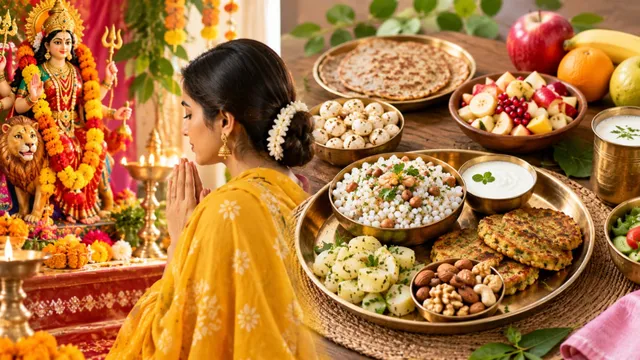
🌸 1. Fasting does NOT mean starving
During Navratri, some people eat nothing, while others eat very little. But there is another common mistake: replacing normal meals with lots of sabudana, potatoes, kuttu puri, pakoras, chips and sweets.
These foods may be allowed during fasting, but eating too much of them can make the diet:
- High in calories
- High in fat
- High in salt
- Low in fibre and protein
So, “fasting food” does not automatically mean “healthy food.”
🍽️ 2. Your fasting plate should have 4 important components
① Protein
Protein helps keep you full and supports muscles and overall body function.
Good fasting options include:
- Milk
- Curd
- Paneer
- Makhana
- A limited amount of peanuts
- Nuts
Example: Kuttu roti + curd/paneer is better than eating only kuttu roti.
② Fibre
Fibre helps digestion and keeps you feeling full.
Good options:
- Cucumber
- Tomato
- Bottle gourd
- Pumpkin
- Spinach
- Other permitted green vegetables
③ Carbohydrates
Carbohydrates provide energy.
Fasting-friendly sources mentioned in the article include:
- Kuttu (buckwheat)
- Singhara (water chestnut)
- Rajgira (amaranth)
- Sama rice
But these should still be eaten in reasonable portions, not unlimited quantities.
④ Healthy fats
Healthy fats are important for the body.
Good choices include:
- Almonds
- Walnuts
- Chia seeds
- Flaxseeds
- Limited peanuts
🌾 3. Kuttu, Singhara, Rajgira etc. are useful—but portion matters
If your fasting tradition permits them, grains such as bajra, ragi and jowar can also be considered.
They provide fibre and micronutrients, but they are still carbohydrates. Therefore, eating unlimited amounts isn’t advisable—particularly for people with diabetes or those trying to lose weight.
⚠️ 4. “Falahari” does not automatically mean healthy
This is one of the most important points in the article.
For example:
Sabudana vada → fried and calorie-dense
Kuttu puri → absorbs a lot of oil
Potato chips → high in fat and salt
Pakoras → fried
Sweets → high in sugar
So simply saying “I am eating fasting food” doesn’t necessarily mean your diet is nutritious.
Better alternatives:
Instead of kuttu puri → lightly cooked kuttu/singhara cheela
Instead of sabudana vada → sabudana khichdi prepared with less oil/ghee
Instead of potato chips → roasted makhana
Instead of eating lots of potatoes → combine a smaller portion with curd and vegetables
Instead of sweets → choose a whole fruit
Instead of sweetened curd → plain curd without added sugar
🍎 5. Whole fruit is better than fruit juice
The article recommends eating whole fruits rather than drinking juice.
Why?
A whole fruit provides fibre and generally gives better satiety than juice.
Better fruit choices include:
- Apple
- Guava
- Pear
- Papaya
- Orange
These are relatively lower-sugar choices compared with fruits such as:
- Banana
- Chikoo
- Grapes
- Mango
This doesn’t mean you can never eat banana or mango. It means the portion should be controlled, especially if you have diabetes or are trying to lose weight.
Important:
Instead of eating fruit continuously throughout the day, having one fruit at a time can help prevent your total calorie and carbohydrate intake from becoming excessive.
💧 6. Don’t forget water
Weakness during fasting isn’t always because you’re eating less.
Dehydration can also cause:
- Weakness
- Headache
- Tiredness
The article suggests fluids such as:
- Water
- Lemon water without added sugar
- Fresh buttermilk
- Coconut water
Avoid using:
- Sugary sherbets
- Packaged juices
- Soft drinks
as your regular fasting beverages.
🧂 7. Rock salt is still salt
Many people think sendha namak (rock salt) can be eaten without restriction during fasting.
But it is still a source of sodium.
Therefore, don’t assume that because you’re using rock salt, you can use unlimited amounts.
Especially be careful with:
- Fasting chips
- Namkeen
- Papad
- Packaged snacks
People with high blood pressure need to be particularly careful about sodium intake.
🍽️ 8. Don’t stay hungry all day and then eat a huge meal
This is another major point.
Instead of:
Nothing all day → huge meal at night ❌
Try:
Small + balanced meals throughout the day ✅
And don’t make every meal just:
- Fruit
- Potato
- Sabudana
Try combinations such as:
Fruit + curd
Makhana + milk
Paneer + vegetables
Kuttu cheela + curd
Kuttu roti + curd + vegetables
This gives you a better combination of energy + protein + fibre.
🩸 9. If you have diabetes, be extra careful
People with diabetes should not assume that fasting is automatically safe.
Foods such as:
- Sabudana
- Potato
- Sweet potato
- Kuttu
- Sama rice
- Fruits
can contribute carbohydrates, so portion control matters.
The article says people with uncontrolled diabetes, repeated low blood sugar, pregnancy, kidney problems, or previous problems during fasting should consult a doctor before fasting.
Very important:
Do NOT change or stop insulin/diabetes medicines yourself.
If a doctor has permitted fasting, blood glucose should be monitored as advised.
Also avoid excessive:
- Sugar
- Honey
- Jaggery
- Sweets
- Sweet drinks
- Fruit juice
❤️ 10. People with high BP should also be careful
For people with hypertension, one of the biggest fasting traps can be:
High salt + fried food
So limit:
- Chips
- Namkeen
- Papad
- Packaged fasting foods
- Fried foods
Prefer:
- Steamed foods
- Roasted foods
- Lightly cooked foods
Continue prescribed BP medicines unless your doctor tells you otherwise.
🚨 11. When should you stop fasting?
Don’t ignore serious symptoms.
The article specifically mentions symptoms such as:
- Shaking
- Sweating
- Dizziness
- Extreme weakness
- Confusion
- Vomiting
- Feeling seriously unwell
In such situations, continuing the fast may not be appropriate and medical advice may be needed.
For people with high BP, chest pain, difficulty breathing, fainting, severe dizziness or a very severe headache require prompt medical attention rather than continuing the fast.
🥗 12. Example of a balanced Navratri diet
The article gives an example like this:
🌅 Morning
- Water
- Unsweetened tea or milk
- 4–5 soaked almonds
- 1–2 walnuts
🍽️ Breakfast
- Kuttu/sama light cheela + curd
OR - Paneer + kuttu/singhara roti
Then later, one fruit.
☀️ Lunch
- Kuttu/rajgira roti
- Paneer/curd
- Green vegetables
- Salad
☕ Evening
- Roasted makhana
- OR a small quantity of nuts
- Unsweetened drink
🌙 Dinner
- Light vegetable
- Curd/paneer
- Limited sama/kuttu preparation
⭐ The whole article in one simple formula
Navratri fasting = Don’t just eat less; eat smart.
Protein: 🥛 Milk, curd, paneer, makhana
Fibre: 🥒 Vegetables + whole fruits
Carbs: 🌾 Kuttu, singhara, rajgira, sama
Healthy fats: 🥜 Almonds, walnuts, chia, flaxseed
Fluids: 💧 Water, unsweetened lemon water, buttermilk
Limit: 🍟 Fried foods, chips, excessive potatoes, sweets, sugary drinks and too much salt
The biggest takeaway is that you don’t have to starve yourself to fast. A balanced, portion-controlled and nutritious falahar can support your energy while respecting your fasting practice.

