



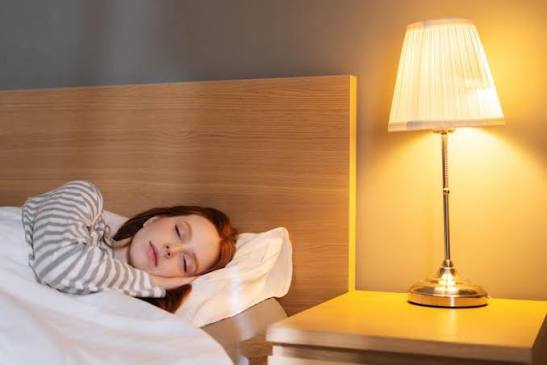
Do you sleep with a night lamp, bedside light or other artificial light switched on? You may want to think twice about how much light enters your bedroom while you sleep. Recent research has found an association between exposure to artificial light at night and changes in the structure and function of the heart.
However, this does not mean that simply sleeping with a night lamp will damage your heart. The research is observational, meaning it identifies a relationship between nighttime light exposure and cardiovascular changes but cannot prove that the light itself directly causes heart disease.
1. Nighttime light may be linked to changes in the heart
A large population-based study involving more than 11,000 people examined nighttime light exposure and heart health. Researchers found that people exposed to higher levels of artificial light at night showed differences in certain measurements of heart structure and function.
These included a higher left ventricular mass and greater wall thickness, changes that can be associated with cardiac remodeling.
2. What is cardiac remodeling?
The heart is a muscular organ, and its structure can change when it is exposed to factors such as high blood pressure or other long-term stress.
Cardiac remodeling refers to changes in the size, shape, thickness or function of the heart muscle. While the changes observed in the study do not mean that everyone exposed to nighttime light will develop heart disease, they highlight a possible connection worth investigating further.
3. Your body clock may be involved
Our bodies follow a natural 24-hour biological rhythm called the circadian rhythm. It helps regulate sleep, hormones, body temperature, metabolism and blood pressure.
Light is one of the strongest signals that controls this internal clock. Therefore, exposure to artificial light during the night may interfere with the body’s normal day-night cycle.
4. Night light can affect melatonin and sleep
Darkness signals the body that it is time to sleep. Exposure to artificial light at night, particularly brighter or blue-enriched light, can suppress the production of melatonin, a hormone involved in regulating sleep.
If nighttime light makes it harder to fall asleep or causes disturbed sleep, the resulting sleep disruption may indirectly affect cardiovascular health.
5. The study also found links with cardiovascular disease
Higher nighttime light exposure was associated with an increased risk of several cardiovascular outcomes, including heart failure, atrial fibrillation, heart attack and stroke.
But this point needs to be understood carefully: these are associations observed in the study. Factors such as lifestyle, existing health conditions, sleep habits and other sources of light exposure can also influence cardiovascular risk. More research is needed to establish whether nighttime light directly contributes to these conditions.
6. Sleep may be an important part of the connection
Researchers found that sleep duration appeared to explain part of the relationship between nighttime light exposure and changes in cardiac structure.
This suggests that disrupted or insufficient sleep could be one pathway through which nighttime light may influence cardiovascular health. Maintaining a regular sleep schedule and getting adequate sleep are therefore important for overall heart health.
7. Should you completely stop using a night lamp?
Not necessarily. If you need a light for safety or comfort, you do not have to sleep in complete darkness at all costs.
Instead, try to keep the bedroom as dark as comfortably possible. If a night light is necessary, choose a very dim light and position it away from your face and eyes. Avoid keeping bright screens, televisions or strong lights switched on throughout the night.
Conclusion
The emerging evidence suggests that nighttime artificial light may be more than just a sleep-related issue. It may also be associated with changes in heart structure and cardiovascular health.
The safest approach is simple: keep your sleeping environment dark and comfortable, reduce unnecessary artificial light at night, maintain good sleep habits and get adequate sleep. At the same time, it is important not to panic over a small night lamp—the current evidence shows an association, not proof that a night lamp directly causes heart damage.

