



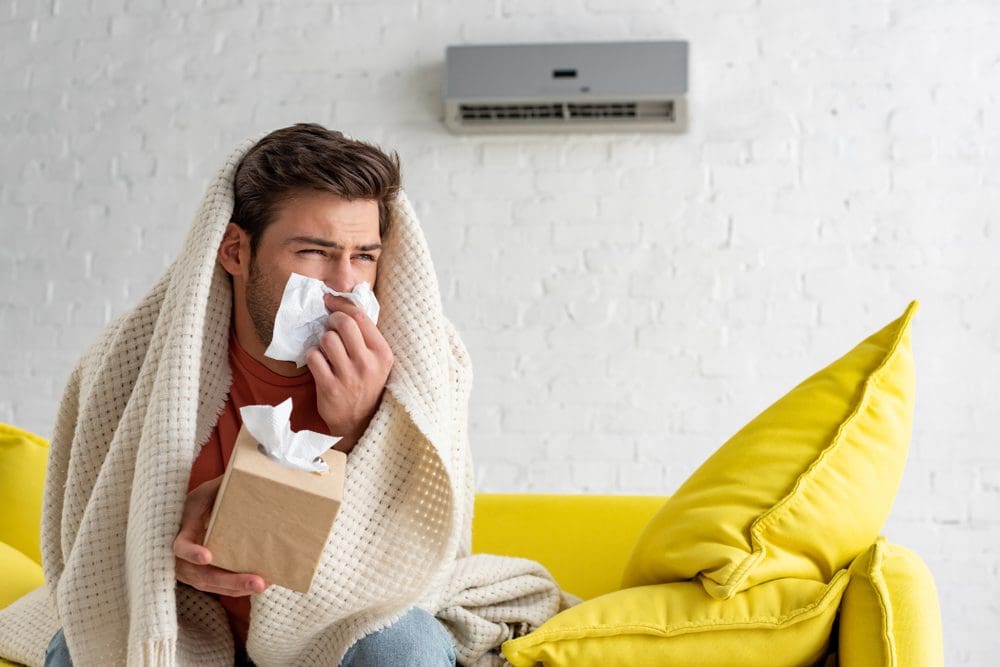
Air conditioners (ACs) provide welcome relief during hot weather, improving comfort and helping prevent heat-related illnesses. However, some people notice that soon after entering an air-conditioned room, they develop a headache, sore throat, dry eyes, or nasal discomfort.
While ACs themselves do not directly cause infections, the cold, dry air, poor maintenance, and sudden temperature changes can irritate the body’s natural protective systems, making some people feel unwell or worsening existing conditions.
Understanding why these symptoms occur can help you use air conditioning comfortably while protecting your health.
Can Air Conditioning Cause Headaches?
The Answer
Yes, air conditioning can contribute to headaches, although the AC is usually an indirect trigger rather than the direct cause.
Several factors may be responsible.
1. Dry Air
Air conditioners remove moisture from indoor air.
Very dry air can:
- Dry out the nasal passages
- Irritate the sinuses
- Trigger sinus pressure
- Cause dehydration of the mucous membranes
These changes may contribute to headaches, especially in people prone to sinus problems.
2. Dehydration
People often drink less water in cool environments because they don’t feel thirsty.
Even mild dehydration can cause:
- Headaches
- Fatigue
- Dizziness
- Difficulty concentrating
3. Sudden Temperature Changes
Moving quickly from intense outdoor heat into a very cold room can temporarily affect blood vessels and muscles.
This rapid change may trigger:
- Tension headaches
- Migraine attacks in susceptible individuals
- Neck stiffness
4. Poor Indoor Air Quality
Dirty AC filters may collect:
- Dust
- Mold spores
- Pollen
- Pet dander
- Other airborne particles
These allergens and irritants can trigger headaches in sensitive people and worsen allergy symptoms.
Why Does Your Throat Feel Sore in AC?
Cold, Dry Air Reduces Moisture
Your throat stays healthy because it is coated with a thin layer of mucus.
Dry air removes moisture from this protective layer.
As a result, you may experience:
- Scratchy throat
- Dry cough
- Hoarseness
- Mild pain while swallowing
This irritation is not necessarily an infection.
Can AC Cause a Cold or Flu?
The Myth
Cold air gives you viral infections.
The Truth
Viruses—not cold air—cause colds and flu.
However, air-conditioned indoor spaces may increase exposure to viruses because people spend more time together in enclosed environments. Poor ventilation can also allow infectious droplets to circulate more easily.
Other Health Problems Linked to Air Conditioning
Some people may experience:
Dry Eyes
Low humidity causes tears to evaporate more quickly, leading to:
- Burning
- Redness
- Blurred vision
- Eye irritation
Nasal Dryness
Dry nasal passages can lead to:
- Stuffiness
- Nosebleeds
- Sinus discomfort
Allergy Symptoms
If AC filters are not cleaned regularly, they may circulate allergens that trigger:
- Sneezing
- Runny nose
- Itchy eyes
- Wheezing
Muscle Stiffness
Cold air blowing directly on the neck, shoulders, or back may cause muscle tightness or discomfort in some people.
Who Is More Sensitive to AC Air?
People at greater risk include:
- Children
- Older adults
- People with asthma
- Individuals with allergies
- Migraine sufferers
- People with chronic sinus problems
- Those with dry eye syndrome
How to Protect Yourself While Using AC
1. Set a Comfortable Temperature
Experts generally recommend keeping indoor temperatures around 24–26°C (75–79°F) for comfort and energy efficiency.
Avoid setting the AC extremely cold, especially if it is much cooler than the outdoor temperature.
2. Stay Hydrated
Drink water regularly, even if you don’t feel thirsty.
Proper hydration helps:
- Keep mucous membranes moist
- Reduce headaches related to dehydration
- Support overall health
3. Avoid Direct Cold Air
Do not sit directly in front of the AC vent.
Continuous cold airflow on the face or neck can increase discomfort and dry the eyes, nose, and throat.
4. Clean the AC Regularly
Dirty filters can circulate:
- Dust
- Mold
- Bacteria
- Allergens
Follow the manufacturer’s maintenance schedule and clean or replace filters as recommended.
5. Maintain Indoor Humidity
If the air feels excessively dry:
- Use a humidifier if appropriate.
- Place indoor plants (where suitable).
- Avoid overcooling the room.
Maintaining moderate humidity can improve comfort.
6. Dress Appropriately
Carry a light sweater or scarf if moving between very hot outdoor conditions and cold indoor environments.
7. Give Your Body Time to Adjust
When coming indoors after being in the heat:
- Spend a few minutes in a shaded or moderately cool area if possible.
- Avoid sudden exposure to very cold air.
Can Sleeping in AC Be Harmful?
Sleeping in an air-conditioned room is generally safe if:
- The temperature is comfortable.
- The room is well ventilated.
- The air is not excessively dry.
- The AC is properly maintained.
Problems are more likely if the room is too cold or the airflow blows directly onto your face throughout the night.
When Should You See a Doctor?
Consult a healthcare professional if you experience:
- Persistent headaches
- Severe sore throat with fever
- Difficulty breathing
- Recurrent sinus infections
- Frequent nosebleeds
- Worsening asthma symptoms
- Symptoms that do not improve after adjusting your environment
These may indicate an underlying medical condition unrelated to the AC itself.
Common Myths About AC
Myth 1: AC Causes Viral Infections
Fact: Viruses cause infections. AC may dry the air or affect indoor ventilation but does not create viruses.
Myth 2: Colder Is Always Better
Fact: Extremely low temperatures can increase discomfort, dryness, and energy use without improving health.
Myth 3: Headaches Mean the AC Is Dangerous
Fact: Headaches are often related to dry air, dehydration, temperature changes, or poor air quality rather than the AC unit itself.
Myth 4: AC Air Is Always Clean
Fact: Without regular maintenance, AC systems can circulate dust, mold, and allergens.
Key Takeaways
- Air conditioners improve comfort but can sometimes contribute to headaches, sore throats, dry eyes, and nasal irritation.
- Dry air, dehydration, sudden temperature changes, and poorly maintained AC systems are common reasons for these symptoms.
- Air conditioning does not directly cause colds or flu, but enclosed indoor spaces may facilitate the spread of respiratory viruses.
- Drinking enough water, avoiding direct cold airflow, keeping the temperature moderate, and cleaning AC filters regularly can help reduce discomfort.
- Persistent or severe symptoms should be evaluated by a healthcare professional.
Conclusion
Air conditioning is an important tool for staying comfortable and preventing heat-related illness, but like any indoor environment, it should be used wisely. If you frequently develop headaches or a sore throat after entering an air-conditioned room, the cause is often dry air, dehydration, sudden temperature shifts, or poor maintenance rather than the cold air itself. By keeping your AC clean, setting a moderate temperature, staying hydrated, and avoiding direct airflow, you can enjoy the benefits of cooling while minimizing unwanted side effects.

