



Introduction
For generations, a chubby child was sometimes considered a sign of good health, prosperity, or proper nutrition. But today, parents need to understand an important difference:
A child being heavier does not automatically mean the child is healthier.
Overweight and obesity in childhood can increase the risk of health problems during childhood and later in life. The World Health Organization (WHO) describes overweight and obesity as abnormal or excessive fat accumulation that can pose a risk to health. Globally, more than 390 million children and adolescents aged 5–19 were overweight in 2022, including more than 160 million living with obesity.
The problem is not simply about appearance or body size. It is about nutrition, physical activity, sleep, metabolic health, emotional well-being, and long-term disease risk.
At the same time, parents should avoid blaming or shaming children. Childhood obesity is influenced by many factors, including genetics, environment, food availability, family habits, socioeconomic conditions, physical activity, sleep, and broader social factors.
Why Is Childhood Overweight a Serious Concern?
Excess body fat during childhood can affect a child’s health in several ways.
Children with overweight or obesity have a higher risk of developing conditions such as:
- Type 2 diabetes
- High blood pressure
- Cardiovascular problems
- Liver disease
- Sleep disorders
- Respiratory problems
- Musculoskeletal problems
- Psychological difficulties
- Low self-esteem and social isolation
Some health consequences may appear during childhood, while others become more significant later in life. Children with obesity are also more likely to remain obese as adults.
That is why childhood weight should be viewed as a health issue, not merely a cosmetic issue.
The Junk Food Problem
One of the biggest challenges facing families today is the easy availability of highly processed, energy-dense foods.
Children are surrounded by:
- Sugary drinks
- Packaged snacks
- Fried foods
- Fast food
- Cakes and pastries
- Candy and sweets
- Highly processed breakfast foods
- Instant noodles and similar convenience foods
- Foods high in added sugars, unhealthy fats, or salt
These foods can be convenient and enjoyable, but frequent consumption can make it much harder for children to maintain a balanced diet.
WHO recommends emphasizing fruits and vegetables, legumes, whole grains, nuts and other nutritious foods while limiting excess sugars and energy-dense foods.
Sugary Drinks Deserve Special Attention
Soft drinks, sweetened juices, energy drinks, flavored beverages and other sugary drinks can add substantial amounts of sugar to a child’s diet without providing the same nutritional value as a balanced meal.
WHO notes that sugar-sweetened beverages can contribute to childhood overweight and obesity because they provide significant amounts of sugar and energy while often offering relatively little nutritional value.
For everyday hydration, water should generally be the first choice.
The Mobile Phone Problem: More Than Just Screen Time
Mobile phones, tablets, televisions, gaming devices and computers have become a normal part of children’s lives.
Technology itself is not the enemy. Screens can be useful for education, communication and entertainment.
The concern arises when screen use begins replacing activities that growing children need, such as:
- Outdoor play
- Sports
- Walking
- Family interaction
- Reading
- Adequate sleep
- Active hobbies
- Face-to-face social interaction
Long periods of sedentary screen use can contribute to a lifestyle in which children move less and spend more time sitting. WHO recommends limiting sedentary screen time, particularly in young children, and replacing sedentary time with active play and adequate sleep.
Research reviewed by WHO has also found an association between higher screen exposure and increased risk of overweight or obesity in children, although screen time is only one factor among many.
The Dangerous Combination: Junk Food + Screens
The problem becomes more concerning when these habits occur together.
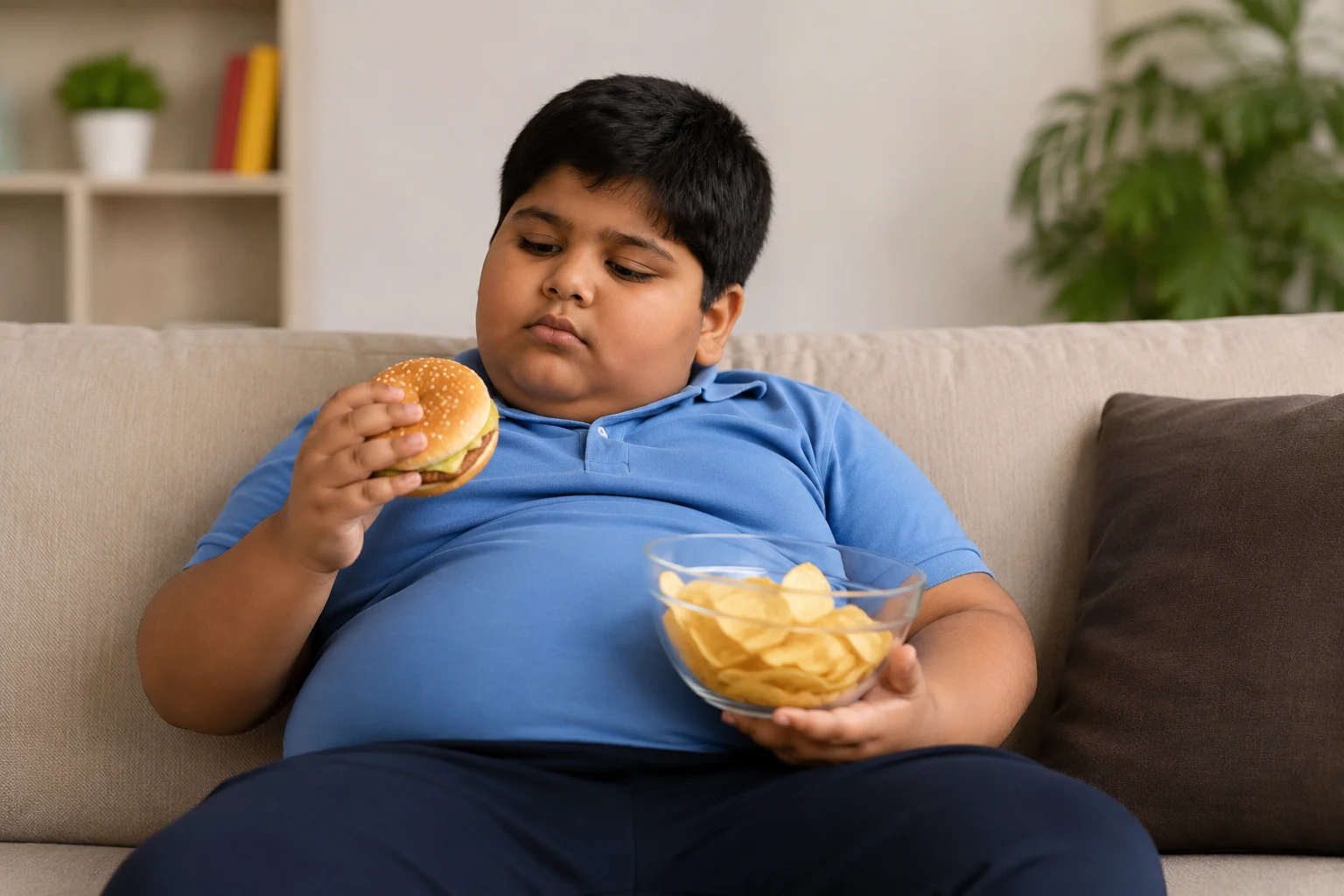
Imagine a child sitting on a sofa for several hours:
Mobile phone → sedentary time → packaged snacks → sugary drink → little physical activity → late bedtime.
When this pattern becomes a daily routine, it can contribute to an unhealthy lifestyle.
The issue is not that one packet of chips or one hour of gaming will make a child obese. The problem is repeated habits over weeks, months and years.
WHO emphasizes that childhood obesity is influenced by dietary patterns, physical activity, sedentary behavior, sleep and broader environmental factors.
Lack of Physical Activity Is Another Major Factor
Children need movement for healthy growth and development.
WHO recommends that children and adolescents accumulate at least 60 minutes of moderate-to-vigorous physical activity each day, appropriate to their age and development.
Physical activity can include:
- Running
- Cycling
- Swimming
- Playing football or other sports
- Dancing
- Jumping
- Outdoor games
- Walking
- Active play with friends
It does not have to mean going to a gym.
For children, play is exercise.
What Happens When Children Stop Playing Outside?
When outdoor play disappears from a child’s routine, several things can happen.
The child may spend more time sitting, moving less and sleeping irregularly. At the same time, sedentary entertainment may be accompanied by frequent snacking.
This can create a cycle:
Less movement → more sitting → more opportunities to snack → increased energy intake → weight gain → reduced willingness to be active.
Breaking this cycle early can be much easier than trying to reverse deeply established habits later.
Childhood Obesity Can Affect More Than Physical Health
The effects are not limited to the body.
Children living with overweight or obesity may experience:
- Bullying
- Teasing
- Social isolation
- Low self-esteem
- Anxiety about appearance
- Reduced quality of life
- Emotional distress
WHO specifically recognizes psychosocial consequences, including stigma, discrimination and bullying, among the concerns associated with childhood overweight and obesity.
This is why shaming a child about weight is never the answer.
The goal should be to create a healthier environment, not to make the child feel guilty about their body.
Parents Must Look at Their Own Habits Too
Children learn from what they see.
If parents spend the evening on their phones while eating packaged snacks in front of the television, it can be difficult to convince a child to adopt a different lifestyle.
Instead, families can create healthy routines together.
For example:
Instead of:
“Put your phone away and go outside!”
Try:
“Let’s all go for a walk together.”
Family participation makes healthy behavior feel normal rather than like a punishment.
What Should Parents Do?
1. Make Water the Default Drink
Keep water readily available and reduce routine consumption of sugary drinks.
2. Make Healthy Food Easy to Access
Keep nutritious options available, such as:
- Fresh fruits
- Vegetables
- Whole grains
- Pulses and legumes
- Nuts, where age-appropriate and safe
- Eggs and other nutritious protein sources
- Milk or other appropriate dairy/alternatives
WHO recommends diets based on adequacy, balance, moderation and diversity, with minimally processed or unprocessed foods forming the foundation.
3. Establish Screen-Free Mealtimes
Encourage children to eat at the table rather than while watching videos or playing games.
4. Create a Daily Play Routine
Give children regular opportunities to run, walk, play sports and participate in active games.
5. Protect Sleep
Sleep is an important part of healthy development. Excessive screen use, particularly near bedtime, can interfere with healthy routines.
6. Avoid Using Junk Food as a Reward
Instead of:
“You finished your homework, so you get chocolate.”
Try:
“You finished your homework—let’s go outside and play together.”
7. Don’t Put a Child on a Strict Diet Without Medical Advice
Children are still growing. Their nutritional needs are different from those of adults.
If you are concerned about your child’s weight, speak with a pediatrician or qualified pediatric nutrition professional rather than starting a restrictive diet independently.
How Do You Know if a Child Is Overweight?
Parents should not rely only on appearance.
Children grow at different rates, and body composition changes throughout childhood and puberty. A healthcare professional can assess a child’s height, weight, growth pattern and BMI-for-age using appropriate growth references.
A child who looks “big” is not necessarily unhealthy, and a child who looks slim is not necessarily healthy.
Health assessment should be based on growth and medical evaluation—not comparisons with classmates or siblings.
Don’t Turn Weight Into a Source of Shame
This message is extremely important.
Telling a child:
“You are fat.”
“You eat too much.”
“You look unhealthy.”
“You need to lose weight.”
can damage self-esteem and may encourage unhealthy relationships with food.
Instead, parents can focus on health behaviors:
- “Let’s eat more fruits and vegetables.”
- “Let’s play outside.”
- “Let’s reduce sugary drinks.”
- “Let’s keep phones away during dinner.”
- “Let’s get enough sleep.”
- “Let’s cook together.”
The objective should be a healthier child—not simply a lower number on the weighing scale.
Small Changes Can Make a Big Difference
Parents do not need to transform the entire household overnight.
Start with simple changes:
Week 1: Replace sugary drinks with water more often.
Week 2: Introduce a daily outdoor play period.
Week 3: Establish screen-free family meals.
Week 4: Add more fruits, vegetables and whole foods to regular meals.
Over time, these small habits can become part of the family’s normal lifestyle.
A Message for Parents
Childhood is not the time to chase an unrealistic body shape.
It is the time to build a strong body, healthy eating habits, an active lifestyle, adequate sleep and a positive relationship with food and movement.
Junk food should not become a child’s everyday diet, and mobile phones should not replace childhood itself.
A child needs more than calories and entertainment. They need nutritious food, movement, sleep, play, family connection and a healthy environment in which to grow.
Conclusion
An overweight child should never be labeled, embarrassed or blamed. But excessive weight gain should also not automatically be dismissed as a sign of being “healthy.”
Childhood overweight and obesity are associated with increased risks of conditions including type 2 diabetes and cardiovascular disease, and obesity can persist into adulthood.
The solution is not fear, punishment or extreme dieting.
The solution is early awareness, healthier food choices, regular physical activity, appropriate screen habits, sufficient sleep, supportive parenting and professional medical guidance when needed.
Parents cannot control every influence on a child’s health—but they can help shape the environment in which that child grows.
Don’t take away your child’s childhood by allowing screens and junk food to replace play and nutritious food. Give them the habits that can protect their health for years to come.

