



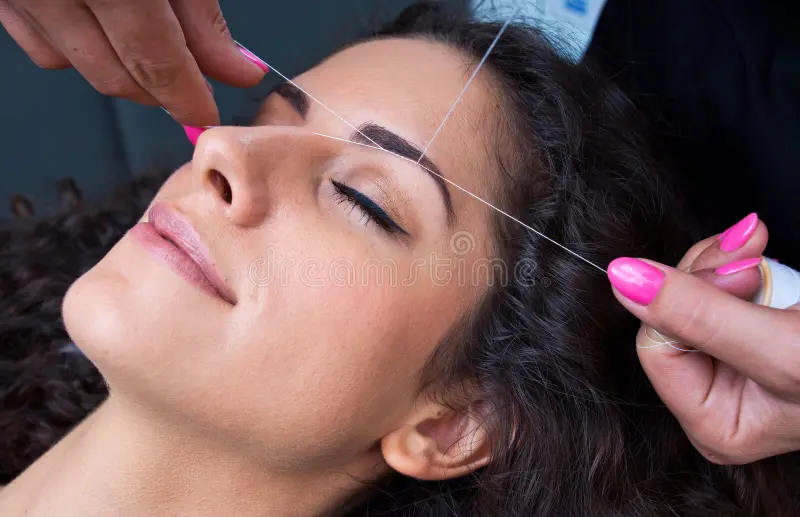
Well-shaped eyebrows can change the appearance of the entire face, which is why eyebrow threading has become a popular beauty treatment. It is quick, inexpensive, precise, and does not require wax or chemical hair-removal creams.
But there is something many people forget: eyebrow threading is still a form of hair removal that can irritate the skin.
The skin around the eyes and eyebrows is delicate. When a thread repeatedly moves across the skin and pulls hairs from their follicles, temporary redness, tenderness, swelling, itching, or small bumps can occur.
Most reactions are mild and short-lived. However, poor hygiene, improper technique, aggressive threading, or threading already-irritated skin can increase the risk of complications.
This article explains the possible side effects of eyebrow threading, who should be careful, how to prevent problems, what to do after threading, and when a reaction requires medical attention.
What Is Eyebrow Threading?
Eyebrow threading is a hair-removal technique that uses a thin thread to remove unwanted hairs from the root.
The thread is twisted and rolled across the skin. As it moves, it catches individual hairs and pulls them out.
One of the main advantages of threading is its precision. A trained technician can remove individual hairs and carefully shape the eyebrows.
Unlike waxing, threading does not involve applying hot wax to the skin. Unlike shaving, it removes hair from the root rather than cutting it at the surface.
However, threading can still cause mechanical irritation to the skin and hair follicles.
Common Side Effects of Eyebrow Threading
- Redness
Temporary redness is one of the most common effects after threading.
The repeated friction of the thread and removal of hairs can cause temporary inflammation around the follicles.
The skin may look pink or red immediately after the procedure.
For most people, this gradually settles as the skin recovers.
What can help?
A cool compress may provide temporary relief. Avoid rubbing or scratching the area.
- Mild Swelling
Some people notice slight swelling around the eyebrows after threading.
This happens because the skin and follicles have been irritated during hair removal.
Mild swelling generally settles without treatment.
If swelling becomes severe, continues to increase, or involves the eyelids or surrounding face, seek medical advice.
- Pain and Tenderness
Threading can cause some discomfort because hairs are pulled from the root.
The amount of pain varies from person to person.
It may be more noticeable when:
The eyebrow hair is thick or coarse.
A large number of hairs are removed.
The skin is sensitive.
The same area is threaded repeatedly.
The technique is too aggressive.
Mild tenderness after threading is usually temporary.
Severe or persistent pain, however, is not something to ignore.
- Small Red or White Bumps
Tiny bumps may develop around the eyebrow area after threading.
These can occur because the hair follicles have been irritated.
The bumps may look similar to small pimples, but they do not necessarily mean that you have acne or an infection.
Important:
Do not squeeze, scratch, or pick the bumps.
Doing so can increase inflammation and may introduce bacteria into the skin.
- Itching
Some people experience mild itching as the skin settles after threading.
Itching may be caused by irritation around the follicles.
Avoid scratching because damaged skin is more vulnerable to infection and discoloration.
If itching is severe or accompanied by a widespread rash, swelling, or blisters, seek medical advice.
- Burning or Stinging
The eyebrow area may temporarily feel warm, burning, or stinging after threading.
This can be more noticeable if the skin is sensitive or if irritating skincare products are applied immediately afterward.
If the burning sensation is severe or does not improve, the skin should be evaluated by a healthcare professional.
Less Common Side Effects of Eyebrow Threading
- Folliculitis
Folliculitis means inflammation of a hair follicle.
It can appear as small red or pimple-like bumps around the hair follicles.
Hair removal can irritate follicles, and bacteria may sometimes contribute to the problem.
Possible signs include:
Red bumps
Tenderness
Itching
Pus-filled bumps
Increasing irritation
If the bumps become increasingly painful, produce pus, or spread, consult a healthcare professional.
- Skin Infection
Infection is uncommon but can occur, particularly when proper hygiene is not maintained.
Potential risk factors include:
Unclean hands
Contaminated thread
Poor salon hygiene
Touching the area repeatedly
Threading broken or infected skin
Choose a reputable salon or trained professional who follows appropriate hygiene practices.
A clean thread should be used for the procedure, and the practitioner should maintain good hand and equipment hygiene.
- Ingrown Hairs
An ingrown hair develops when a hair grows back into the skin instead of growing outward normally.
It can cause:
A small bump
Redness
Itching
Tenderness
Local inflammation
Although ingrown hairs are more commonly associated with some other hair-removal methods, they can occur after hair removal.
Avoid digging into or squeezing an ingrown hair. Persistent or infected lesions should be assessed by a healthcare professional.
- Dark Spots and Hyperpigmentation
Skin inflammation can sometimes leave behind darker patches called post-inflammatory hyperpigmentation.
This can be particularly noticeable in people with darker skin tones.
Repeated irritation, picking, or inflammation after threading may increase the likelihood of pigmentation changes.
If you frequently develop dark marks after threading, discuss alternative hair-removal methods with a dermatologist.
- Skin Damage
Threading should be performed gently.
Repeatedly going over the same area, using excessive pressure, or threading already-irritated skin can cause unnecessary trauma.
Avoid threading areas affected by:
Sunburn
Cuts
Scratches
Active infection
Significant irritation
Open wounds
Severe inflammation
Allow damaged skin to heal before undergoing hair removal.
Can Eyebrow Threading Cause Acne?
Threading does not automatically cause acne.
However, the procedure can temporarily irritate hair follicles and the surrounding skin.
Problems may be more likely if you:
Touch your eyebrows frequently afterward.
Apply heavy or irritating products.
Thread directly over inflamed acne.
Have poor hygiene during or after the procedure.
If you develop persistent acne-like bumps after threading, a dermatologist can determine whether they are acne, folliculitis, irritation, or another condition.
Can Threading Cause Scarring?
Permanent scarring from routine eyebrow threading is uncommon.
However, significant inflammation, infection, repeated trauma, or picking at irritated skin can increase the risk of long-lasting skin changes.
The best approach is simple:
Don’t pick, squeeze, scratch, or repeatedly rub irritated skin.
Can Threading Damage Eyebrow Hair Follicles?
Threading removes hair from the follicle, but it does not normally destroy the follicle.
With repeated hair removal, some people may notice changes in the appearance or density of their eyebrow hair over time.
However, eyebrow thinning can also have many other causes, including medical conditions and nutritional or hormonal factors.
If you experience sudden or significant eyebrow hair loss, do not automatically blame threading. Consult a healthcare professional.
Can Threading Cause Permanent Hair Loss?
Routine eyebrow threading is not generally intended to permanently remove eyebrow hair.
If eyebrow density gradually decreases over time, several factors may be involved.
These can include:
Repeated hair removal
Natural changes in hair growth
Aging
Hormonal conditions
Skin disorders
Nutritional problems
Certain medications
Sudden eyebrow loss deserves medical evaluation.
Who Should Avoid or Postpone Eyebrow Threading?
Threading should generally be postponed when the skin is damaged or actively inflamed.
Be particularly cautious if you have:
Sunburn around the eyebrows
Active eczema
Open wounds
Skin infection
Severe acne in the area
Significant skin irritation
A recent cosmetic procedure affecting the area
If you have a skin condition around your eyebrows, ask a dermatologist before removing hair from the affected area.
What About People Using Acne or Skincare Treatments?
Some prescription and cosmetic skincare products can make the skin more sensitive or prone to irritation.
This is particularly important for people using strong acne treatments, exfoliating products, retinoids, or other products that affect the outer layer of the skin.
Hair removal over sensitized skin can result in more irritation or skin injury.
If you regularly use prescription skincare products, ask your dermatologist whether eyebrow threading is appropriate and whether you should temporarily stop any products before or after the procedure.
Do not stop a prescribed medication without medical advice.
Is Threading Better Than Waxing?
There is no single hair-removal method that is best for everyone.
Threading
Advantages:
Precise eyebrow shaping
Removes individual hairs
Does not require hot wax
Does not involve applying depilatory chemicals
Possible disadvantages:
Can cause redness
Can be uncomfortable
May irritate sensitive skin
Can cause bumps or follicle irritation
Waxing
Waxing can also produce smooth results, but it may cause irritation, burns from excessively hot wax, allergic reactions to products, or skin injury in people whose skin has been sensitized.
The best option depends on your skin type, hair characteristics, medical history, and personal preference.
How to Choose a Safe Threading Salon
The quality and hygiene of the salon are important.
Before getting your eyebrows threaded, look for a professional who:
Maintains clean hands.
Uses fresh thread.
Keeps the work area clean.
Avoids touching unnecessary surfaces during the procedure.
Does not thread infected or broken skin.
Uses appropriate hygiene practices.
Has experience with eyebrow shaping.
If a salon appears unhygienic, it is better to choose another professional.
What Should You Do Before Threading?
Good preparation can reduce unnecessary irritation.
Before your appointment:
Clean your face gently.
Avoid threading over sunburned skin.
Tell the technician if your skin is sensitive.
Mention any active skin problems.
Tell your dermatologist about repeated reactions if you have experienced them before.
Avoid unnecessary exfoliation immediately before the procedure.
Do not assume that more exfoliation will make hair removal better. Over-exfoliating can make the skin more sensitive.
What Should You Do After Eyebrow Threading?
After threading, your skin may be temporarily sensitive.
Helpful aftercare includes:
Keep the area clean.
Avoid unnecessary touching.
Avoid scratching.
Use a cool compress if the area feels irritated.
Use a gentle moisturizer if appropriate for your skin.
Avoid harsh exfoliation immediately afterward.
Avoid products that sting or burn.
Protect the area from excessive sun exposure.
Give your skin time to recover.
What Should You Avoid Immediately After Threading?
For a short period after threading, avoid anything that makes the freshly treated area more irritated.
Depending on your skin sensitivity, this may include:
Strong exfoliating products
Scrubs
Products that cause burning or stinging
Excessive rubbing
Picking at bumps
Unnecessary touching
If a skincare product causes significant burning after threading, stop using it on the irritated area and seek professional advice if symptoms persist.
Can You Wear Makeup After Threading?
Freshly threaded skin can be more sensitive.
If possible, give the skin some time to settle before applying makeup directly to the treated area.
If you must use makeup, use clean products and tools and avoid applying products that sting or irritate the skin.
Do not share makeup or applicators, particularly around irritated skin.
Can You Go Out in the Sun After Threading?
The skin can be temporarily irritated after hair removal.
Excessive sun exposure can contribute to skin irritation and may increase the risk of pigmentation changes in susceptible individuals.
Protect your face from excessive sun exposure and use appropriate sun protection.
When Should You See a Doctor?
Most mild reactions after eyebrow threading improve without medical treatment.
However, contact a healthcare professional if you experience:
Severe or worsening pain
Significant swelling
Pus or discharge
Increasing warmth and redness
Redness that continues to spread
Blisters
Severe rash
Fever
Significant skin discoloration
Persistent or worsening bumps
Symptoms that do not improve as expected
These symptoms can indicate infection, significant inflammation, an allergic reaction, or another skin condition.
How Can You Tell Irritation From Infection?
This distinction is important.
Mild irritation may cause:
Temporary redness
Mild tenderness
Small bumps
Slight itching
Mild swelling
These symptoms generally improve as the skin settles.
Infection may be more concerning when there is:
Increasing pain
Pus
Spreading redness
Increasing warmth
Significant swelling
Fever
Symptoms that continue to worsen rather than improve
If you are uncertain, have the area evaluated rather than trying multiple home remedies.
Common Mistakes After Threading
Several habits can make irritation worse.
Mistake 1: Touching the Eyebrows Repeatedly
Hands can transfer dirt and microorganisms to irritated skin.
Mistake 2: Picking at Bumps
Picking can cause inflammation, infection, and pigmentation.
Mistake 3: Using Strong Skincare Immediately
Strong exfoliants and irritating products can make freshly threaded skin uncomfortable.
Mistake 4: Threading Infected Skin
Hair removal can worsen irritation and potentially spread infection.
Mistake 5: Choosing a Salon Without Considering Hygiene
A low price should never be more important than cleanliness and safe technique.
What If You Have a Severe Reaction?
If you develop sudden facial swelling, difficulty breathing, faintness, or other symptoms suggesting a severe allergic reaction, seek emergency medical care immediately.
Do not assume that a severe reaction is a normal consequence of threading.
Is Eyebrow Threading Safe During Pregnancy?
Pregnancy itself does not necessarily make threading unsafe. However, pregnancy can make some people’s skin more sensitive.
If you are pregnant and have developed increased skin sensitivity, pigmentation, or irritation, discuss appropriate hair-removal options with your healthcare professional.
Always tell the beauty professional if there are any skin problems or unusual reactions.
Frequently Asked Questions
Does eyebrow threading damage the skin?
It can cause temporary irritation, especially in sensitive skin, but properly performed threading generally does not cause permanent skin damage.
How long does redness last after threading?
Mild redness often settles relatively quickly. If redness is severe, spreading, or persistent, it should be medically assessed.
Why do I get bumps after eyebrow threading?
Bumps can result from irritation around hair follicles. Persistent, painful, or pus-filled bumps may indicate folliculitis or another problem.
Can threading cause an allergic reaction?
A true allergy to the thread itself is possible but uncommon. Reactions may also result from products applied to the skin before or after threading.
Should I scratch itchy skin after threading?
No. Scratching can increase inflammation and damage the skin.
Can I thread my eyebrows if I have acne?
It is better to avoid threading directly over inflamed or active acne lesions. Ask a dermatologist if you frequently experience irritation.
Can threading make eyebrows thinner?
Repeated hair removal may alter hair density or appearance over time in some people, but significant eyebrow thinning can have many causes and should not automatically be attributed to threading.
Final Thoughts
Eyebrow threading is a convenient and precise method of removing unwanted hair, but it is not completely free from side effects.
The most common reactions are temporary redness, mild swelling, tenderness, itching, burning, and small bumps. Less common complications can include folliculitis, infection, ingrown hairs, pigmentation changes, and skin injury.
The good news is that many problems can be prevented by taking simple precautions:
Choose a hygienic and experienced professional. Avoid threading damaged or infected skin. Don’t repeatedly touch or pick the treated area. Avoid harsh skincare products while the skin is irritated, and seek medical advice when symptoms are severe or worsening.
Remember, eyebrow shaping is a cosmetic procedure. Healthy skin should always come before beauty trends.

