



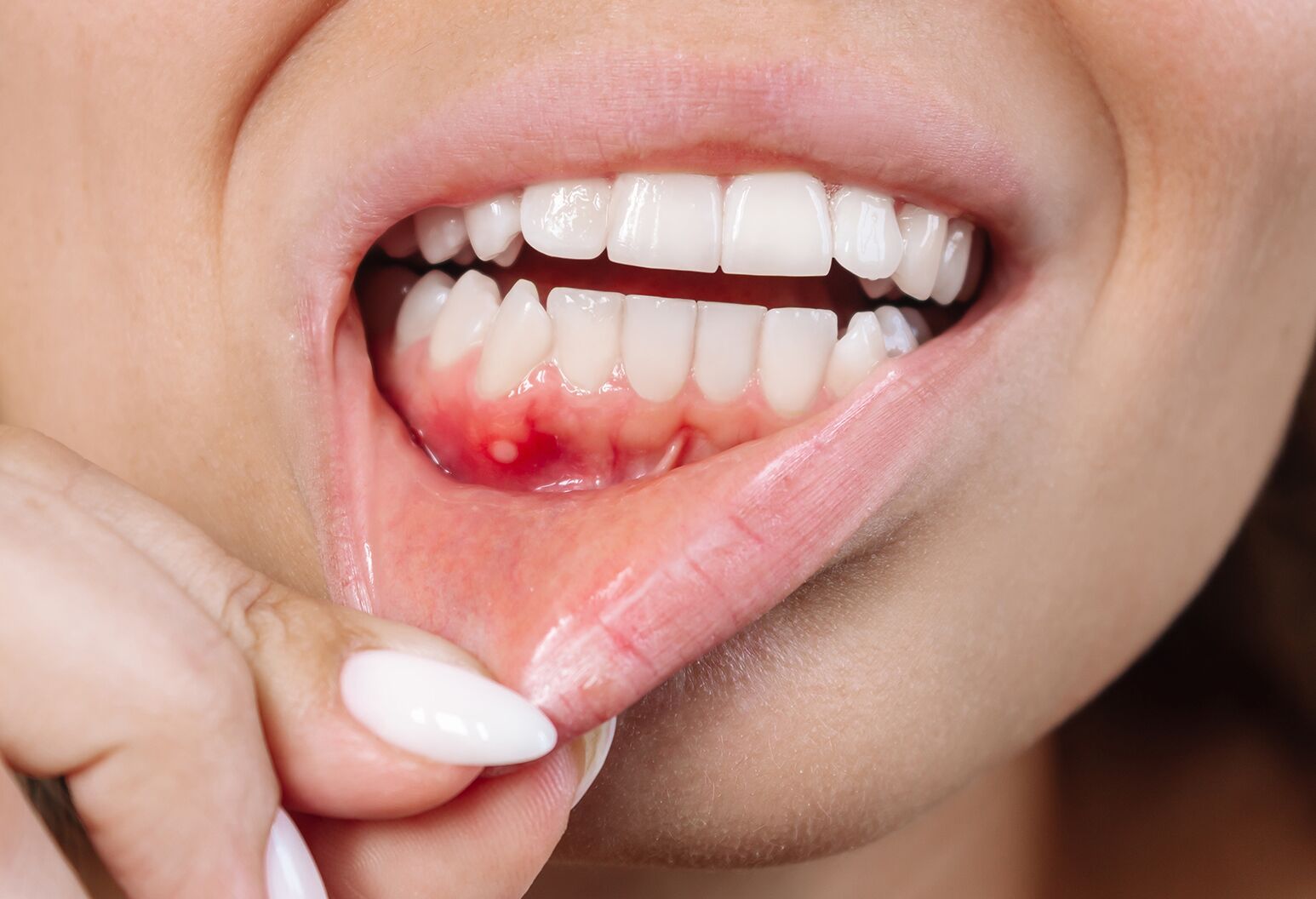
Most mouth ulcers are harmless and heal on their own within 1–2 weeks. They are commonly caused by minor injuries, stress, nutritional deficiencies, or certain foods. However, a mouth ulcer that does not heal after two weeks should be evaluated by a dentist or doctor, as it could be an early sign of oral (mouth) cancer.
Doctors are also noting that oral cancer can occur in people who have never smoked or used tobacco, although tobacco and alcohol remain the strongest risk factors.
What Is a Mouth Ulcer?
A mouth ulcer (also called a canker sore) is a small, painful sore that develops inside the mouth.
Common causes include:
- Accidentally biting your cheek or tongue
- Braces or sharp teeth causing irritation
- Stress
- Lack of vitamin B12, iron, or folate
- Hormonal changes
- Certain foods (spicy, acidic, or very hot)
- Some medications
- Viral or immune-related conditions
Most mouth ulcers:
- Heal within 7–14 days
- Are painful but not dangerous
- Do not leave permanent damage
What Is Oral Cancer?
Oral cancer is a type of cancer that can develop in the:
- Lips
- Tongue
- Gums
- Inner cheeks
- Roof of the mouth
- Floor of the mouth
- Throat (oropharynx)
Early detection is important because treatment is generally more effective when the disease is found at an early stage.
How Can You Tell the Difference?
| Mouth Ulcer | Possible Oral Cancer |
|---|---|
| Usually heals within 1–2 weeks | Persists for more than 2 weeks |
| Often painful | May be painless in early stages |
| Round or oval with a white or yellow center | May appear as a persistent ulcer, lump, or thickened area |
| Usually improves over time | May gradually worsen or not change |
| Often linked to injury or irritation | May occur without an obvious cause |
A persistent ulcer does not automatically mean cancer, but it should not be ignored.
Warning Signs That Need Medical Attention
See a healthcare professional if you notice:
- A mouth ulcer lasting more than two weeks
- A lump or thickened area inside the mouth
- Red, white, or mixed red-and-white patches
- Difficulty chewing or swallowing
- Persistent pain in the mouth or throat
- Loose teeth without a clear dental reason
- Numbness of the lips or tongue
- Difficulty moving the tongue or jaw
- A sore that bleeds easily
- A persistent hoarse voice or neck lump (especially if accompanied by other symptoms)
These symptoms can have causes other than cancer, but they should be evaluated.
Can Oral Cancer Occur Without Tobacco or Cigarettes?
Yes.
Although smoking and smokeless tobacco greatly increase the risk, oral cancer can also develop in people who have never used tobacco.
Other risk factors include:
Human papillomavirus (HPV) infection
Certain strains of HPV, particularly HPV-16, are associated with cancers of the mouth and throat.
Heavy alcohol consumption
Alcohol can increase the risk, especially when combined with tobacco.
Excessive sun exposure
Long-term sun exposure increases the risk of cancer of the lips.
Age
The risk generally increases with age, although younger adults can also be affected.
Poor oral hygiene or chronic irritation
These may contribute in some cases, though the evidence is less consistent than for tobacco and alcohol.
Diet and nutrition
Low intake of fruits and vegetables has been associated with a higher risk in some studies.
Weakened immune system
People with certain medical conditions or medications that suppress immunity may have an increased risk.
Why Are Doctors Paying More Attention?
Healthcare professionals are seeing more cases of HPV-related cancers of the mouth and throat, including in people who do not smoke. This doesn’t mean oral cancer is becoming common in all non-smokers, but it highlights that persistent symptoms deserve evaluation regardless of tobacco use.
When Should You See a Doctor or Dentist?
Arrange an appointment if:
- A mouth ulcer hasn’t healed after two weeks
- The sore keeps coming back in the same place
- You notice unusual lumps, patches, or swelling
- Eating, speaking, or swallowing becomes difficult
- You have unexplained bleeding or persistent pain
A dentist or doctor may examine the area and, if needed, recommend further tests or a biopsy to determine the cause.
Can Oral Cancer Be Prevented?
You can’t prevent every case, but you can reduce your risk by:
- Avoiding tobacco products
- Limiting alcohol consumption
- Maintaining good oral hygiene
- Eating a balanced diet rich in fruits and vegetables
- Protecting your lips from excessive sun exposure
- Having regular dental check-ups
- Discussing HPV vaccination with your healthcare provider if appropriate for your age and health status
Myth vs. Fact
| Myth | Fact |
|---|---|
| Every mouth ulcer is cancer. | Most mouth ulcers are harmless and heal within 1–2 weeks. |
| Only smokers get oral cancer. | Oral cancer can also occur in non-smokers, though smoking remains a major risk factor. |
| If it doesn’t hurt, it’s not serious. | Early oral cancer may be painless. |
| Mouth ulcers always need antibiotics. | Most do not; treatment depends on the underlying cause. |
Final Takeaway
Most mouth ulcers are benign and heal within one to two weeks, but any sore, ulcer, lump, or patch in the mouth that persists for more than two weeks should be examined by a healthcare professional. While tobacco and alcohol remain major risk factors for oral cancer, not all cases occur in smokers, and HPV-related oral cancers have increased awareness of the disease in non-smokers. Early evaluation doesn’t mean you have cancer—it helps rule out serious conditions and allows prompt treatment if needed.

