



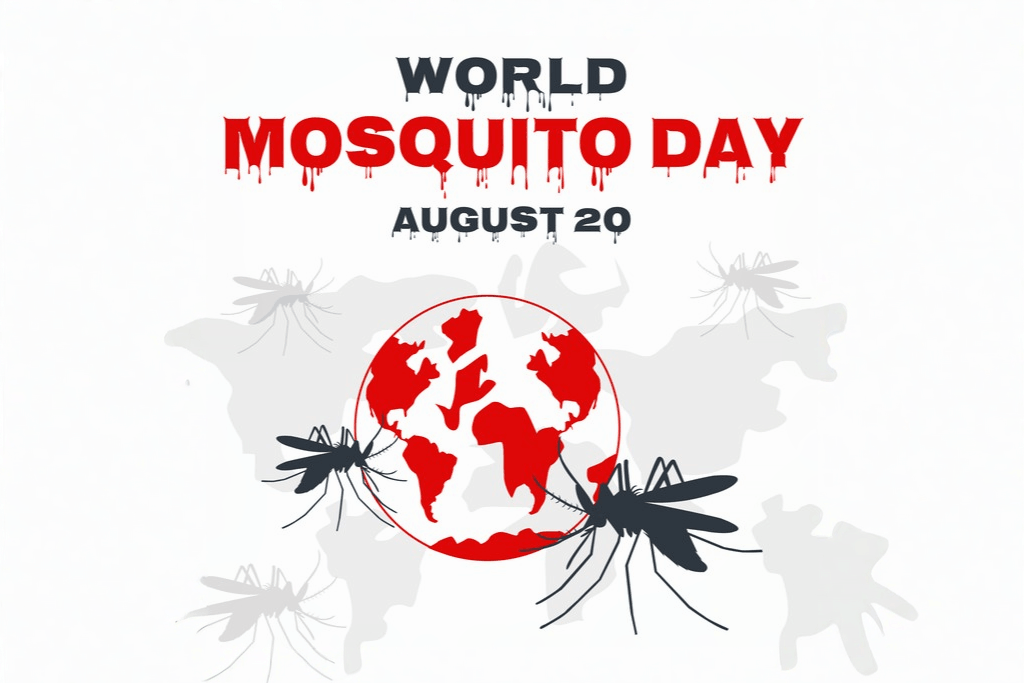
Every year, World Mosquito Day is observed on August 20 to raise awareness about mosquitoes and the serious diseases they can transmit.
At first glance, a mosquito may seem like nothing more than a small, irritating insect. But some mosquito species can transmit dangerous infections, including malaria, dengue, chikungunya, Zika and yellow fever.
World Mosquito Day is therefore not simply about mosquito bites. It is about understanding how mosquito-borne diseases spread, recognizing their symptoms, preventing mosquito breeding and protecting communities through effective public-health measures.
The date commemorates the discovery made on August 20, 1897, when British physician Sir Ronald Ross demonstrated that mosquitoes could transmit malaria parasites between humans.
When Is World Mosquito Day 2026?
World Mosquito Day 2026 will be observed on Thursday, August 20, 2026.
The day provides an opportunity for governments, healthcare professionals, schools, communities and families to discuss mosquito-borne diseases and practical prevention.
While awareness is highlighted on August 20, mosquito prevention is something that needs to continue throughout the year—particularly in areas where mosquito populations and mosquito-borne diseases are common.
Why Are Mosquitoes Dangerous?
Not every mosquito carries disease, and a mosquito bite does not automatically mean that a person will become sick.
The concern is that certain mosquito species can become infected with pathogens and then transmit them when they bite another person.
Mosquitoes can transmit:
- Parasites
- Viruses
- Other disease-causing pathogens
Different mosquito species transmit different diseases.
For example, Anopheles mosquitoes are responsible for transmitting malaria parasites, while Aedes mosquitoes can transmit diseases such as dengue, chikungunya and Zika.
Major Diseases Spread by Mosquitoes
1. Dengue
Dengue is one of the most important mosquito-borne viral diseases, particularly in tropical and subtropical regions.
It is transmitted mainly by infected Aedes mosquitoes.
Symptoms can include:
- High fever
- Severe headache
- Pain behind the eyes
- Muscle and joint pain
- Nausea
- Vomiting
- Rash
Most people recover, but some infections progress to severe dengue, which can become life-threatening and requires urgent medical care.
WHO estimates that roughly half of the world’s population is now at risk of dengue, with an estimated 100–400 million infections occurring each year.
2. Malaria
Malaria is caused by parasites and is transmitted to humans through the bites of infected mosquitoes.
It is particularly important in tropical countries.
Common symptoms include:
- Fever
- Chills
- Headache
- Weakness
- Fatigue
Severe malaria can cause serious complications, including confusion, seizures and difficulty breathing.
Unlike many viral mosquito-borne illnesses, malaria is preventable and curable, but it can be life-threatening if diagnosis and treatment are delayed.
3. Chikungunya
Chikungunya is a viral infection transmitted mainly by Aedes aegypti and Aedes albopictus mosquitoes.
It commonly causes:
- Fever
- Severe joint pain
- Muscle pain
- Headache
- Rash
- Joint swelling
The joint pain can sometimes be prolonged.
These same Aedes mosquitoes can also transmit dengue and Zika viruses.
4. Zika Virus
Zika is another mosquito-borne viral infection associated primarily with Aedes mosquitoes.
In many infected people, symptoms may be mild or absent. When symptoms occur, they can include fever, rash, joint pain and conjunctivitis.
Zika is particularly important during pregnancy because infection can cause serious complications for the developing fetus.
5. Yellow Fever
Yellow fever is a mosquito-borne viral disease found mainly in parts of Africa and Latin America.
It can cause fever and, in severe cases, serious liver and other organ complications.
A safe and effective vaccine provides long-term protection against yellow fever.
Why World Mosquito Day Matters
Mosquito-borne diseases remain a major global health challenge.
The World Mosquito Program reports that mosquito-borne diseases collectively infect hundreds of millions of people and cause more than one million deaths each year.
The impact is not limited to individual patients.
Outbreaks can place pressure on:
- Hospitals
- Healthcare workers
- Families
- Schools
- Workplaces
- Public-health systems
- Local economies
Prevention is therefore much more than an individual responsibility. It is a community health priority.
Mosquitoes and Climate Change
Climate and environmental conditions can influence mosquito populations and the geographical spread of mosquito-borne diseases.
Changes in temperature, rainfall, flooding and other environmental conditions can create more favorable conditions for mosquito breeding and survival.
The World Mosquito Program notes that warming temperatures and changing weather patterns can expand the areas where mosquitoes thrive and potentially extend the transmission season.
This makes mosquito surveillance, disease monitoring and prevention increasingly important.
Why Standing Water Is a Problem
Many mosquitoes lay their eggs in water.
Even small amounts of stagnant water around homes can potentially provide breeding sites.
Examples include:
- Buckets
- Flowerpot trays
- Discarded containers
- Old tires
- Uncovered water tanks
- Clogged drains
- Plastic containers
- Other objects that collect rainwater
This is why removing standing water is one of the most practical ways communities can reduce mosquito breeding.
A Simple Weekly Habit
Walk around your home and surroundings and ask:
“Where could water collect here?”
Empty, clean, cover or appropriately manage containers that can hold stagnant water.
Do not wait until you see large numbers of mosquitoes.
How to Protect Yourself From Mosquito Bites
Mosquito protection should be part of everyday life in areas where mosquito-borne diseases are common.
1. Use Mosquito Repellent
Use an appropriate insect repellent according to the product instructions.
2. Wear Protective Clothing
When practical, wear clothing that covers the arms and legs, particularly in areas with heavy mosquito activity.
3. Use Window and Door Screens
Screens can help prevent mosquitoes from entering homes.
4. Use Mosquito Nets
Mosquito nets can provide important protection, particularly for people sleeping in areas where mosquito-borne diseases are common.
5. Remove Standing Water
Regularly inspect your home, balcony, garden and surroundings for containers holding stagnant water.
6. Follow Local Public-Health Advice
During outbreaks, local health authorities may recommend additional mosquito-control measures.
Don’t Forget That Some Mosquitoes Bite During the Day
Many people associate mosquito bites with nighttime.
However, Aedes mosquitoes can bite during daylight hours as well as indoors and outdoors.
This is particularly important for diseases such as dengue, chikungunya and Zika.
Therefore, mosquito protection should not be limited to nighttime.
What About Mosquito Repellent for Children?
Parents should choose mosquito repellents carefully and follow the product label.
The appropriate product and concentration can depend on the child’s age.
Do not apply repellent to a child’s hands, eyes, mouth or damaged skin, and do not allow young children to apply repellent themselves.
For babies and young children, parents should follow advice from a pediatrician or local health authority regarding appropriate mosquito protection.
How Can Communities Prevent Mosquito-Borne Diseases?
Individual protection is important, but community action is equally valuable.
Communities can:
- Remove standing water.
- Improve waste management.
- Keep drains clear.
- Cover water-storage containers.
- Participate in mosquito-control programs.
- Report mosquito-borne disease outbreaks.
- Follow public-health recommendations.
- Encourage awareness in schools and neighborhoods.
Mosquito control works best when individuals, communities and public-health authorities work together.
Modern Mosquito Control
Mosquito prevention is not limited to insecticides and removing standing water.
Researchers are developing and evaluating innovative approaches to mosquito-borne disease prevention.
One example is the Wolbachia method, in which mosquitoes carrying naturally occurring Wolbachia bacteria are introduced into target areas. The World Mosquito Program says its evidence shows that high levels of Wolbachia in local mosquito populations can significantly reduce dengue transmission.
By May 2026, the program reported projects in 15 countries and more than 16 million people protected through its Wolbachia mosquito programs.
Such approaches demonstrate how science and public-health innovation can complement traditional mosquito-control methods.
What Should You Do After a Mosquito Bite?
A mosquito bite does not necessarily mean that you have been infected with a disease.
Most ordinary bites cause localized symptoms such as:
- Itching
- Redness
- Mild swelling
Avoid excessive scratching because scratching can damage the skin and increase the risk of secondary infection.
However, if you develop symptoms such as fever, severe headache, intense body or joint pain, rash, vomiting, unusual bleeding, confusion, breathing difficulty or significant weakness after mosquito exposure—particularly during a local outbreak—contact a healthcare professional promptly.
Do not assume that every fever is dengue or malaria, but do not ignore concerning symptoms either.
Warning Signs of Severe Dengue
Dengue can sometimes become severe.
Warning signs may include:
- Severe abdominal pain
- Persistent vomiting
- Bleeding
- Extreme weakness or restlessness
- Breathing difficulty
- Blood in vomit or stool
- Rapid deterioration after the fever begins to improve
Severe dengue can be life-threatening and requires urgent medical care.
Mosquito Prevention at Home
A simple home routine can make a difference.
Every Few Days
Check:
- Water coolers
- Flowerpots
- Plant trays
- Buckets
- Drains
- Outdoor containers
- Water-storage areas
Regularly
- Empty unnecessary standing water.
- Clean containers.
- Keep water tanks properly covered.
- Dispose of items that collect rainwater.
- Keep surroundings clean.
The goal is simple:
No unnecessary stagnant water means fewer opportunities for mosquitoes to breed.
Myths About Mosquitoes
Myth 1: “Only dirty homes have mosquitoes.”
False.
Mosquitoes can breed around clean homes if suitable water-holding containers are present.
Myth 2: “Mosquitoes only bite at night.”
False.
Some important disease-carrying mosquitoes, including Aedes mosquitoes, can bite during the day.
Myth 3: “Every mosquito bite causes dengue.”
False.
A mosquito must be carrying the relevant pathogen to transmit a particular disease.
Myth 4: “If there are no mosquitoes inside the house, there is no risk.”
Not necessarily.
People can be bitten outdoors, and some mosquito species can also enter homes.
Myth 5: “Mosquito prevention is only the government’s responsibility.”
False.
Public-health programs are essential, but households and communities also play an important role in reducing breeding sites and protecting themselves from bites.
World Mosquito Day 2026: A Message for Every Family
World Mosquito Day is a reminder that a tiny insect can have an enormous impact on human health.
But it is also a reminder that prevention is possible.
You can start with simple actions:
Remove stagnant water.
Protect yourself from mosquito bites.
Keep water containers covered.
Use appropriate mosquito repellents.
Use screens and mosquito nets where appropriate.
Recognize warning symptoms.
Follow local health authorities during outbreaks.
And most importantly, don’t underestimate mosquito-borne diseases.
Conclusion
World Mosquito Day 2026, observed on August 20, is an opportunity to turn awareness into action.
Mosquitoes can transmit serious diseases including dengue, malaria, chikungunya, Zika and yellow fever. These diseases can affect individuals, families and entire communities.
The good news is that many mosquito-borne infections can be prevented or their risk reduced through a combination of personal protection, environmental management, vaccination where available, disease surveillance and community-based mosquito-control programs.
This World Mosquito Day, don’t simply remember the date.
Check your surroundings. Remove stagnant water. Protect your family from mosquito bites. Learn the warning signs of mosquito-borne diseases. And encourage your community to take prevention seriously.
Because when it comes to mosquitoes, prevention is not a one-day activity—it is an everyday responsibility.

